There’s no doubt that the pandemic changed the way we work. Hybrid structures are now common as businesses recognise cost savings and the positive impact on productivity and overall employee loyalty. However, to reap the benefits of a hybrid workplace like productivity and employee satisfaction, hybrid workplaces need to transform from within.
Successful hybrid workplaces incorporate technology to enhance the employee experience so that they feel more productive, engaged, empowered and supported, which in turn makes businesses more resilient. Evidence supports the fact that hybrid workforces have higher performers and have greater employee retention, engagement and profitability. In fact, a study by Gartner reported that traditional workplaces operating on a 40-hour work week in the office found that only 36% of their workforce were high performers. However, organisations with hybrid workplaces saw that 55% of their workforce were high performers.
Challenges brought on by the hybrid workspace
Many processes, especially in the space of recruitment and onboarding, stand transformed today. A survey of approximately 800 senior HR professionals revealed that 35% of them felt that remote recruiting is far more challenging compared to traditional in-person recruitment, 38% felt that remote interviews were less impactful and productive than in-person meetings, another recent survey revealed that 50% of the respondents shared that remote on-boarding processes were the most challenging part of hybrid work.
This is because building relationships can be a lot harder when you’re communicating via screens. New hires may be left with a feeling of anxiety and isolation because it’s hard to read body language and build relationships without the casual interactions which would normally happen in-person. Besides onboarding itself, employee training is also a challenge if one is not equipped with seamless tech-driven solutions that can identify gaps and facilitate learning effectively. When people work in isolation or silos, it can be hard to identify skill gaps and upskilling requirements. While technological solutions exist, they cannot personalize and humanise the employee experience and training, so delivering a good UI/UX and omni-device functionality are the need of the hour to better facilitate these processes remotely.
Fostering collaboration and communication in an effective way
Human beings are social animals, we have evolved to develop complex structures of communication which go far beyond just speech. From the tone of voice to body language, there are a lot of visual cues involved in communication, and therefore, physical separation can limit spontaneous interactions and informal communication which can impact the depth of face-to-face exchanges. The sheer lack of these interactions can limit team bonding and may also lead to misunderstandings and gaps in communication. For these reasons, making the most of work-from-office days by having training and collaboration spaces that can be used for meetings on office days, so that employees feel a sense of togetherness. This helps make planning and collaboration far more personal and encourages teams to be comfortable and creative together.
Enabling a strong workplace culture
In a hybrid setting, traditional methods of cultivating a shared ethos get disrupted, especially for employees in different geographies or time zones who may not have the ability to come into the workplace as often as they’d like. In such cases, it helps to have a robust system with advanced audio-visual solutions to enhance collaboration and productivity. For larger companies, building an Experience Centre might be a very immersive way for employees to get to experience the culture of the organization. Such centres can offer a rich, interactive experience with audio-visual technology, video walls, touchscreen displays and state-of-the-art sound systems which create a rich experience for visitors and clients. These spaces are perfect for organizations with a hybrid setup because they offer a blend of informal and formal spaces where employees can get to know one another and familiarise themselves with the organisational ethos as well.
Enabling inclusive hybrid meetings
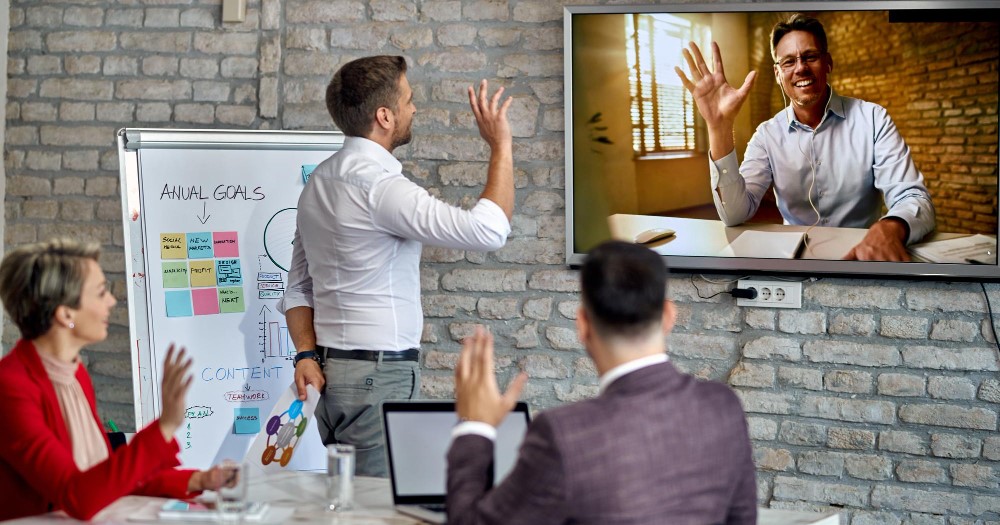
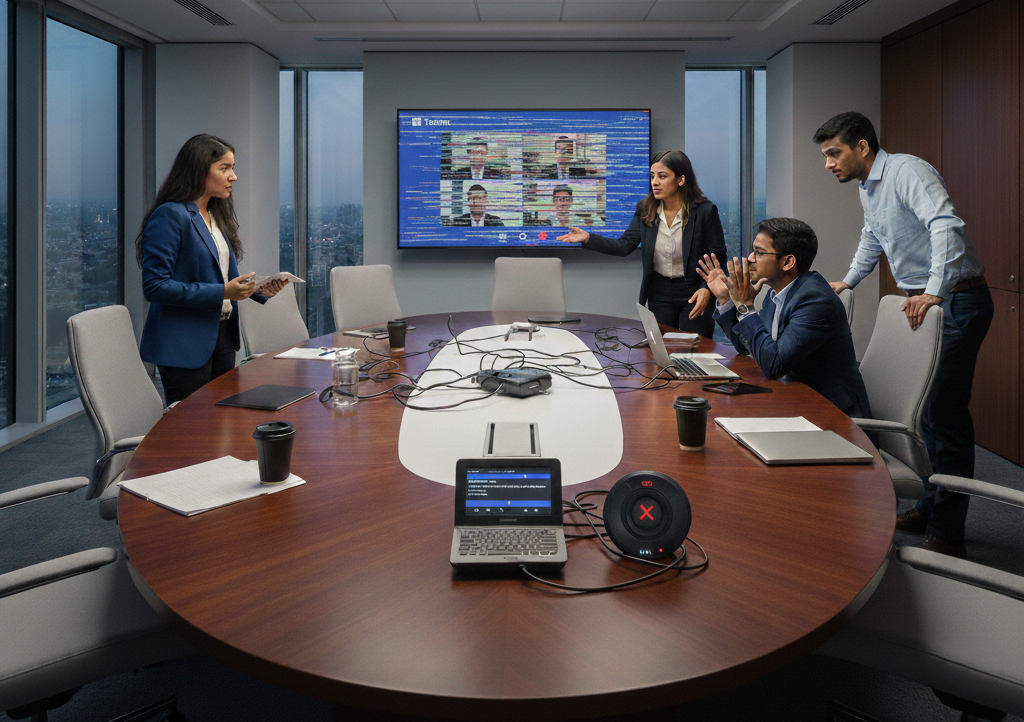
Meetings in hybrid workplaces can be a challenge due to physical separation, uneven participation, connectivity issues, disruptions in communication and limited non-verbal cues which can hamper understanding. Therefore, shifting from informal meeting software to something that’s professional and industry standard like Microsoft Teams can help drastically in optimising workflows, improving meetings and making collaboration seem seamless. Onboarding systems like Zoom Rooms can make remote meetings far more productive with HD Video and Audio, simple one-touch join, wireless sharing, easy room scheduling and AI-driven analytics for performance insights. They also help in making employee training sessions far more interactive and immersive which goes a long way in a remote setting.
Investing in the right technology
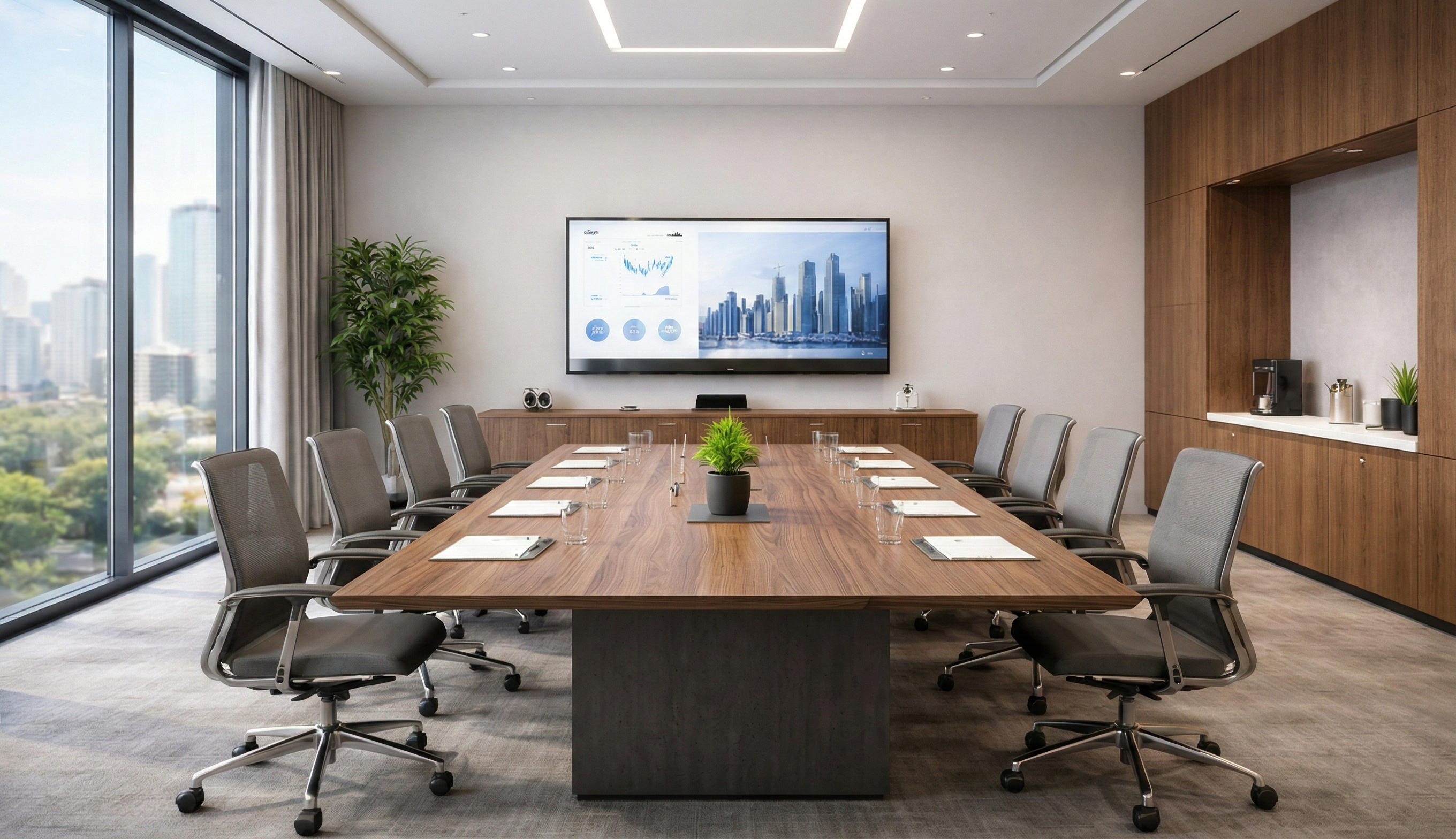
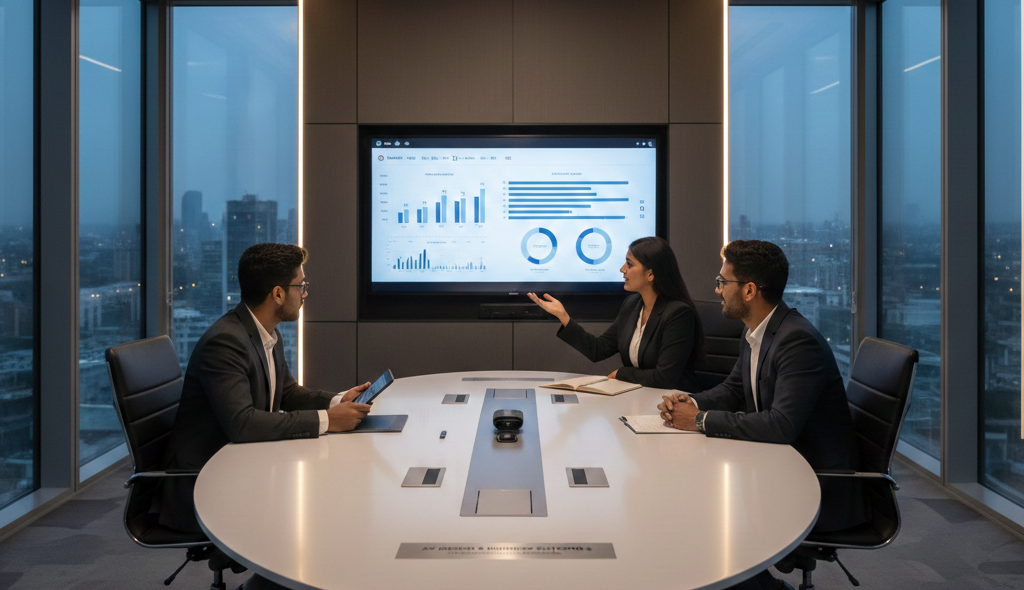
One of the biggest perks of adopting hybrid work structures is that they allow organizations to downsize office spaces. This is very cost-effective, and organizations can utilise these savings to make smaller spaces more productive and to enable remote working smoothly and efficiently. The hybrid workplace should be transformed to integrate user-friendly and immersive AV experiences that bridge the gap in communication and drive collaboration, scalability and security. These systems should support both in-office and remote collaboration to adapt to different needs. Without modern AV solutions, the chances of employees feeling isolated are much higher, and if skill gaps are not identified and actioned, it can also lead to burnout and employee dissatisfaction. This is why hybrid organizations must leverage technology to provide a smooth, AV-integrated process to foster employee training and upskilling.
The ultimate goal of any good HR management would be to deliver long-term business value and competitive advantage by setting up a strong workplace culture that’s productive and enables smooth workflows, communication, and training irrespective of office days or work-from-home days. If you’re looking to transform your workplace into a hybrid-friendly workplace, you can trust us to deliver end-to-end solutions that will boost overall productivity and help remote and hybrid workplaces truly thrive. Get in touch if you’d like to tailor solutions for your organization.