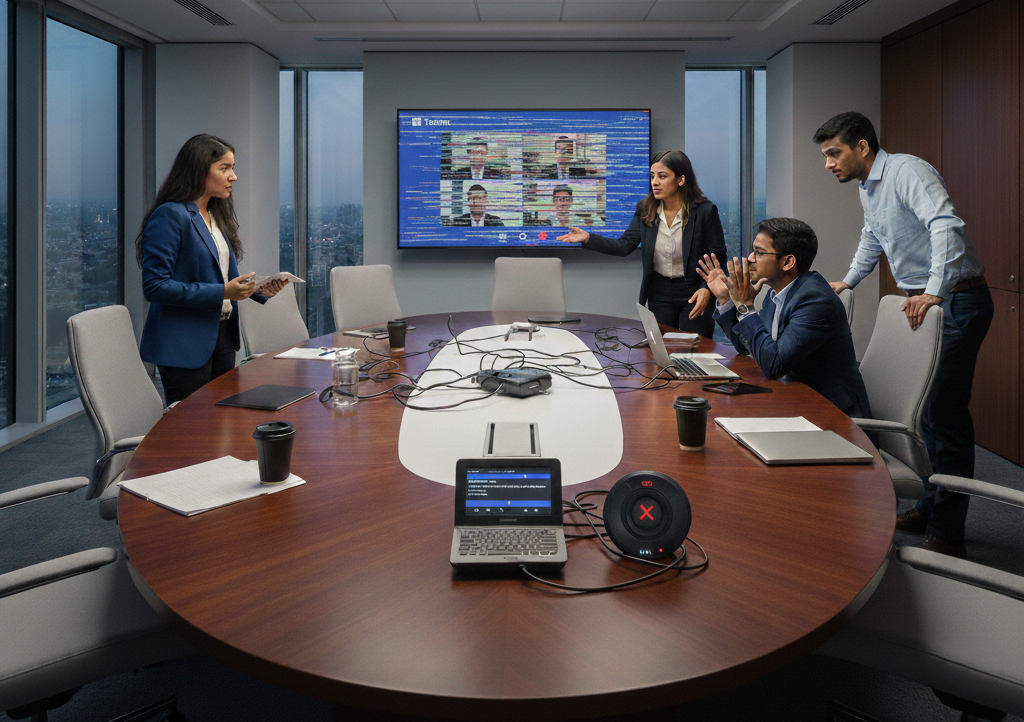
Learn why micro-delays in AV systems slow decisions, weaken buyer confidence, and reduce deal velocity, plus how modern AV solutions keep sales conversations moving.
Sales teams depend on clarity, speed, and confidence in every interaction. You lose these advantages when your audio or video stutters, lags, or forces people to repeat themselves. A small echo during a critical pitch. A few seconds of silence when someone shares content. A frozen video feed during an important demo. These issues look minor, but they interrupt the flow of thinking. They break attention. They slow response time. They create hesitation.
Hesitation reduces trust in the presenter. Once trust drops, decision-making slows. Slow decisions weaken deal momentum. Deals slip into longer cycles and buyers lose urgency.
This chain reaction starts with small AV delays. These delays interrupt conversations at the micro level and affect outcomes at the macro level. This blog explains how these delays form, why they affect buyer psychology, and how you can remove this friction with modern audio visual solutions.
The Real Impact of Micro AV Friction
Every delay forces your audience to pause and think about the interruption instead of your message. A one second lag feels small, but it breaks the rhythm of a live discussion.
Common friction points include:
- Micro-latency during speech or screen sharing
- Echoes in rooms with poor audio balancing
- Slow device switching during presentations
- Content delays when switching from slides to demos
- Glitches when multiple remote participants join or leave
These delays distract the buyer. You lose their attention. Even small delays create frustration. A survey from the tech industry found that seventy percent of users form negative opinions about a presenter when they experience audio or video breakdowns. The presenter might have a strong pitch, but the buyer focuses on the disruption.
Sales leaders often focus on pitch training or better collateral. Few examine the systems that deliver the message. Slow AV technology works against the presenter even when the content is strong.
How Hesitation Slows Decision Making
A decision moves forward when the buyer feels clarity, urgency, and confidence. AV friction disrupts each of these factors. A small latency forces the buyer to pause. A pause forces the brain to process the interruption. This slows their emotional commitment to the conversation.
Here is how hesitation forms:
- Small AV delays interrupt the flow of thought.
- Participants lose context during long pauses.
- The presenter repeats points to regain clarity.
- The buyer questions their understanding.
- Repetition signals uncertainty.
- Uncertainty slows decisions.
This pattern happens in meetings across industries. When teams work in hybrid environments, these issues increase because networks vary, rooms differ, and devices mix across locations.
A delayed response gives the impression of disorganisation. Even if the presenter is prepared, the technology creates the opposite impression. The buyer starts to wonder about the execution strength of the organisation. This affects trust and slows forward movement.
How Delayed Responses Affect Deal Momentum
Deal momentum depends on uninterrupted progress. Every meeting pushes the deal closer to a decision. When your AV system slows the conversation, you lose momentum.
Here are the most common impacts:
- Repeated interruptions lower meeting energy.
- Buyers take longer to ask questions.
- Presenters lose flow during demos.
- Action items turn vague because key points were missed.
- Follow up meetings become necessary.
- Deal cycles stretch beyond forecast.
Once a buyer feels friction, they reduce their engagement. They delay further conversations. They postpone internal discussions. They explore alternatives. Deals begin to drift.
In competitive sectors like enterprise technology, buyers expect smooth communication. They expect quick answers. Slow AV systems signal slow operations. This hurts your position even before the evaluation begins.
Why The Problem Grows in Hybrid Work
Hybrid work adds layers of complexity to every meeting. You have different devices in different environments. You have networks with unstable bandwidth. You have meeting rooms that are not optimised for acoustics. You have global teams working across time zones.
These realities increase the likelihood of micro-delays. Teams waste time adjusting microphones, connecting cables, restarting devices, or waiting for content to load.
Hybrid work requires seamless communication. The moment your system struggles, collaboration slows. Internal decisions slow. External decisions slow. Sales, operations, and leadership all lose rhythm.
If you want fast decisions, you need stable and responsive audio visual infrastructure that works across all environments.
How Modern AV Solutions Remove Hesitation
Modern AV systems reduce human hesitation by removing friction at the interaction level. Fast and reliable systems keep conversations flowing. Clear audio keeps attention. Smooth video reduces miscommunication. Responsive displays and collaboration tools reduce pauses.
Here are examples of solutions that deliver this speed:
These solutions remove setup delays. They improve clarity. They keep people talking without interruptions. You get better engagement because the technology stays invisible.
When technology becomes invisible, the message becomes stronger.
Practical Steps to Reduce AV Hesitation
Organisations often overlook small friction points. A structured approach helps identify the root issues.
Start with these actions:
- Audit existing meeting rooms for latency, audio balance, and connectivity issues.
- Measure the average time your team needs to start a meeting.
- Standardise devices and platforms across departments.
- Implement room systems that auto configure audio and video.
- Train teams on room usage and best practices.
- Build processes for quick technical escalation.
Small improvements compound. Even saving two minutes per meeting across twenty rooms gives back hours each week. Faster starts lead to clearer discussions and stronger decisions.
The Business Case for Faster AV Performance
Time lost in meetings directly affects business outcomes. Slow AV systems reduce productivity, increase meeting fatigue, and weaken momentum in high stakes interactions.
Faster AV performance delivers:
- Better internal alignment
- Shorter deal cycles
- Higher clarity during technical demos
- Improved presentation quality
- Stronger buyer confidence
- Lower friction during remote collaboration
When your communication improves, your speed improves. When your speed improves, your outcomes improve.
Final Thoughts
Strong AV systems remove friction from conversations. When your audio and video respond instantly, you create confidence. You reduce hesitation. You move decisions forward with clarity and speed. You protect your deal momentum because every interaction stays smooth.
Resurgent helps organisations build this speed into their meeting environments. Our corporate AV solutions increase collaboration quality across locations and devices. With solutions like Microsoft Surface Hub 2S, Samsung Flip, Microsoft Teams, Jabra PanaCast, PADS4 Digital Signage, Crestron Flex, Surge+, and AirServer, your teams stay aligned and responsive.
Resurgent has delivered audio visual solutions for over a decade. We focus on time efficiency, strong workflow design, and dependable performance. Our deployment teams align every project with your business goals. Our quality control processes ensure reliability at every stage. Our systems support hybrid teams, global offices, and fast paced organisations that need decisions without delays.
We help you simplify communication and accelerate progress. Contact us today to strengthen your AV infrastructure and protect your deal momentum.
FAQs
- Why do small AV delays affect sales conversations so much?
Even a one second lag breaks thinking flow, lowers attention, and weakens the buyer’s confidence in the presenter.
- Why does deal momentum drop when AV systems respond slowly?
Frequent delays drain meeting energy, stretch timelines, and push buyers to postpone next steps.
- Why is hybrid work increasing AV related hesitation?
Teams use mixed devices and unstable networks, which raises the chances of latency, audio imbalance, and setup delays.