Explore how sound quality, delay, and visual clarity shape workplace culture, trust, and collaboration across modern hybrid and global teams.
You join a meeting. Someone speaks. The audio drops for two seconds. A face freezes mid-sentence. You miss the point. You stop asking questions. The meeting moves on.
You leave with partial clarity and quiet frustration.
This scene repeats across offices and hybrid setups every day. People often label these moments as technical issues. They feel small. They feel routine. They rarely receive attention from leadership or HR.
Yet these moments shape how people feel at work.
Culture does not form through mission statements. Culture forms through daily interactions, supported by corporate AV solutions that enable clear communication and collaboration across hybrid and global teams. Those interactions rely on audio and visual systems. Sound quality, delay, and clarity influence who speaks, who listens, and who disengages.
This reality places audio-visual systems at the center of workplace culture. Not as support tools. As emotional infrastructure.
Why AV Quality Shapes How People Feel
Work depends on communication. Communication depends on clarity. When clarity breaks, trust erodes.
Poor audio forces people to repeat themselves. Delayed video disrupts timing. Blurred visuals reduce attention. Over time, teams adapt in unhealthy ways.
Common behavioral shifts appear quickly.
- People speak less in meetings.
- Remote participants stay silent.
- Decisions move offline into side chats.
- Frustration replaces focus.
These shifts do not appear in engagement surveys as AV issues. They show up as reduced confidence, slower decisions, and lower participation.
HR teams work hard to improve inclusion, psychological safety, and belonging. Audio-visual systems either support those goals or quietly undermine them.
Sound as a Signal of Respect
Sound quality sends a message. Clear sound signals respect for the speaker. Distorted sound signals neglect.
When people struggle to hear colleagues, they disengage. When voices echo or drop, meetings lose rhythm. When microphones fail, speakers lose authority.
Sound issues affect more than comprehension. They affect emotion.
People interpret poor sound as a lack of preparation. They feel less valued. They speak less often. Over time, they withdraw from group discussions.
Strong sound design reverses this pattern.
- Voices sound natural and consistent.
- Everyone hears without strain.
- Speakers feel confident.
- Meetings move faster.
Sound clarity supports equal participation. It supports trust. It supports focus.
Delay and the Psychology of Interruption
Latency changes behavior. Even small delays disrupt conversation flow.
When video and audio fall out of sync, people interrupt each other. Pauses feel awkward. Laughter arrives late. Reactions miss the moment.
These micro disruptions affect group dynamics. People hesitate before speaking. They defer to louder voices. Remote participants fade into the background.
Delay creates hierarchy without intent.
Low-latency systems restore natural timing. Conversations feel human. Responses feel immediate. Teams regain rhythm.
This rhythm matters. Fast feedback builds energy. Smooth turn-taking builds confidence. Clear timing builds trust.
Clarity and Cognitive Load
Visual clarity reduces mental effort. Blurry screens increase fatigue.
When screens lack resolution or brightness, people strain to read content. They miss details. They lose focus.
High clarity displays change behavior.
- Eyes move less between devices.
- Attention stays on shared content.
- Decisions form faster.
Clear visuals support alignment. They support memory. They support action.
This impact grows in hybrid settings. Remote participants rely on screens for every cue. Poor clarity isolates them further.
Meetings as Emotional Spaces
Meetings shape culture more than any document. They reinforce norms around voice, power, and inclusion.
AV systems influence meeting behavior in subtle ways.
- Who speaks first?
- Who interrupts?
- Who stays silent?
When AV works well, meetings feel balanced. When AV fails, meetings favor those in the room.
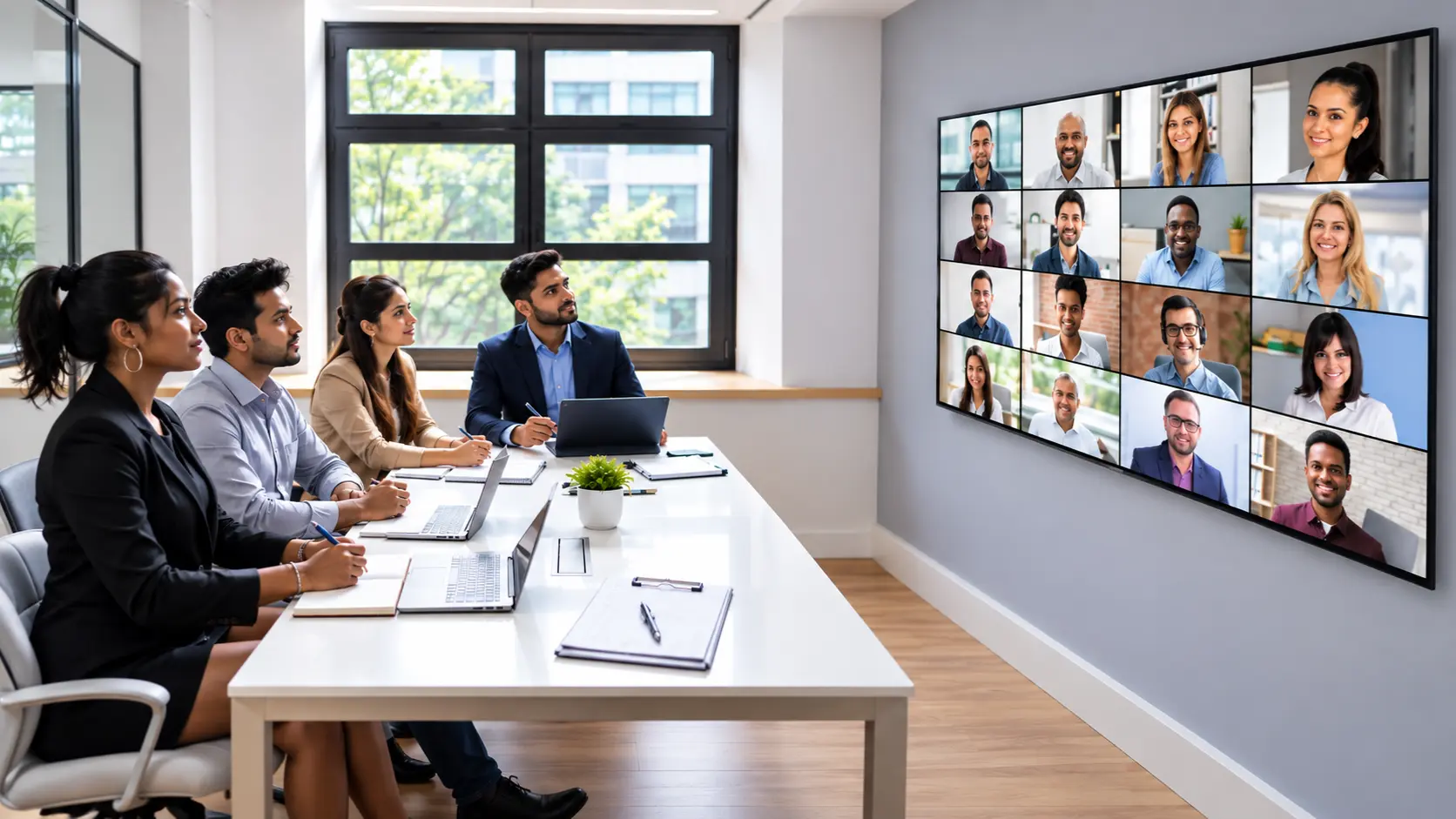
This imbalance damages trust. Remote employees feel peripheral. Hybrid teams split into visible and invisible groups.
Strong AV design restores equity. Everyone appears clearly. Everyone sounds equal. Everyone stays present.
The HR Lens on AV Decisions
HR teams focus on experience, inclusion, and engagement. AV decisions often sit elsewhere. This separation creates blind spots.
AV choices affect onboarding, performance reviews, training, and leadership communication. They shape how safe people feel speaking up.
For HR leaders, AV quality links directly to cultural outcomes.
- Inclusion depends on equal access to voice.
- Engagement depends on friction-free interaction.
- Trust depends on clarity and consistency.
Viewing AV as infrastructure for people, not rooms, changes priorities.
Hybrid Work Raises the Stakes
Hybrid work multiplies the impact of AV systems. People no longer share one space or one device.
Teams span offices, homes, and time zones. Meetings cross platforms and hardware types. Small failures scale fast.
In hybrid settings, audio-visual systems form the primary workplace. Not a supplement.
Strong hybrid AV design focuses on experience, not equipment.
- Consistent sound across spaces.
- Equal framing for all participants.
- Simple controls for quick starts.
Complex systems frustrate users. Simple systems support adoption.
Technology fades into the background. Interaction moves forward.
From Tools to Experiences
Many organizations still treat AV as a checklist. Install screens. Add microphones. Move on.
This approach misses the point. AV systems shape experiences. Experiences shape behavior. Behavior shapes culture.
Experience-driven AV design starts with questions.
- Who needs to speak most often?
- Who risks exclusion?
- Where delays cause friction?
Answers guide choices around layout, hardware, and software integration.
Examples From Modern Workplaces
Organizations investing in thoughtful AV design see clear outcomes.
Global teams reduce meeting times due to faster alignment. Remote employees report higher participation. Leadership communication feels more consistent across locations.
Tools such as Microsoft Teams, Crestron Flex, and Jabra PanaCast support this shift. Interactive displays like Microsoft Surface Hub 2S and Samsung Flip improve collaboration. Digital signage platforms like PADS4 keep communication visible and timely.
Wireless sharing through AirServer removes setup friction. Systems such as Surge+ simplify control across rooms.
The value comes from integration, not individual products.
Design Principles for Emotionally Intelligent Workspaces
Effective AV environments follow clear principles:
- Clarity first: Prioritize sound and visuals over room aesthetics.
- Equity by design: Treat remote and in-room participants as equals.
- Speed over complexity: Reduce steps to start meetings.
- Consistency across spaces: Keep experiences familiar across offices.
- Support and maintenance: Prevent failures before meetings start.
These principles support people, not devices.
Resurgent and the Culture of Connection
Resurgent builds audio-visual solutions for modern organizations. The focus stays on collaboration, clarity, and speed.
Corporate AV solutions from Resurgent support global growth and hybrid work. Systems connect people across locations and devices. Teams communicate without friction.
Resurgent integrates platforms such as Microsoft Teams, Crestron Flex, Jabra PanaCast, and Microsoft Surface Hub 2S. Interactive displays, video collaboration tools, and digital signage work together as one experience.
Each deployment aligns with business goals. Custom plans support scale. Quality control ensures reliability. Enterprise project delivery teams manage timelines and transparency.
The result is predictable performance and confident use.
People do not think about technology during meetings. They focus on ideas and decisions.
Why This Matters Now
Workplaces face pressure to move faster. Decisions require clarity. Teams require trust.
AV systems influence both. They either slow progress or support momentum.
Ignoring this link leaves culture to chance. Addressing it builds intentional environments.
Sound, delay, and clarity shape how people feel, speak, and listen. These elements deserve strategic attention.
Closing Perspective
Culture grows through interaction. Interaction depends on experience. Experience depends on audio-visual clarity.
Organizations investing in emotionally intelligent workspaces support inclusion, trust, and performance.
Resurgent designs these environments with purpose. Over a decade of experience supports teams through change, growth, and hybrid work.
Resurgent stands ready to transform digital experiences across workplaces. Reach out to us today to create collaborative environments where people connect clearly and move forward together.
FAQs
- Why do sound and video issues affect workplace culture so much?
Because repeated audio drops, delays, and poor visuals reduce trust, confidence, and participation in everyday interactions.
- How does AV quality influence inclusion in hybrid meetings?
Clear sound, low delay, and equal visuals give remote and in-room employees the same ability to speak, react, and be heard.
- Why should HR care about audio-visual systems?
AV decisions shape onboarding, performance conversations, training, and psychological safety across teams.