Clinical Workflows Have Changed. Should Collaboration Spaces Follow?
Hospital teams no longer gather only in fixed meeting rooms to discuss cases. Patient care now moves across operating theatres, imaging suites, wards, and remote links.
Read moreBlogs - Posted on October 8, 2026
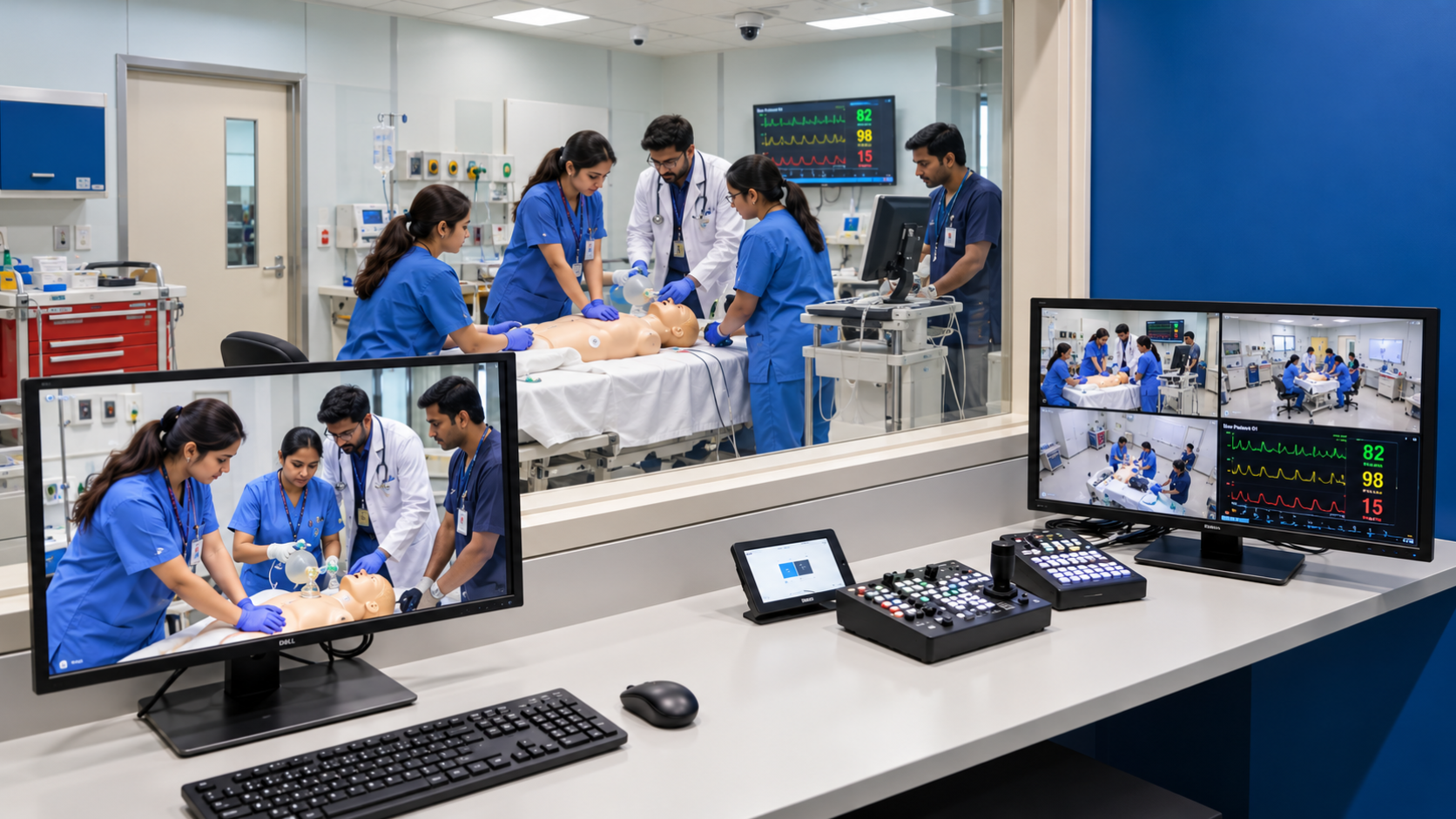
A single camera pointed at a mannequin and a screen on the wall looks simple. Many simulation labs actually start there. You set up the room. You run the scenario. You hit record. Then you gather the team for a quick review. It feels like progress. But it is not enough.
Working with audio-visual system integrators who understand healthcare environments can make the difference between a basic setup and one that truly supports learning. Choosing the right audio-video integrator guarantees your investment delivers measurable results rather than just another piece of equipment.
Real clinical care involves constant communication. Multiple people speak at once. Voices overlap. Body language carries meaning. Monitors beep. Equipment moves. Decisions happen under pressure. A basic camera and screen miss most of that. The result is training that feels staged rather than real. Learners leave with incomplete feedback. Teams miss chances to improve how they work together.
This gap matters because simulation exists to build skills that transfer to actual patients. When the environment fails to match real conditions, the learning stays limited.
Think about a trauma bay during a critical case. The trauma lead calls for labs. A nurse confirms the order. A resident starts the airway while another prepares the line. The respiratory therapist adjusts the ventilator. Someone watches the clock. Another tracks the blood products. Observation happens from several angles at once. Communication flows in short, precise bursts. Review later requires clear audio of every exchange and visual detail of every hand movement.
A single fixed camera simply cannot capture that. One screen cannot display the full picture for observers or remote learners. The review session then relies on memory and incomplete footage. Key moments start to disappear.
You need systems that record multiple views at the same time. You need audio that isolates voices even in noisy rooms. You need ways to tag events in real time so the debrief focuses on what counts. You need displays that show vital signs, patient monitors, and procedure views side by side without delay.
These requirements go far beyond consumer cameras and office screens.
Simulation works best when different roles train together. Nurses, physicians, respiratory therapists, and technicians all bring their skills. The AV setup must support that mix.
Consider an operating room simulation for a surgical emergency. The scrub tech hands instruments. The anesthesiologist manages the airway. The surgeon calls for help. Circulating nurses track counts and equipment. A basic single camera misses the instrument tray and the monitor banks. The debrief then focuses only on the surgical field. The rest of the team receives less useful feedback.
With multiple synchronized views, the full team sees how their actions affected others. The nurse notices a delay in blood product delivery. The anesthesiologist hears a missed verbal order. The group discusses both the technical steps and the communication patterns. Learning becomes shared rather than siloed.
The same principle applies to emergency department resuscitations, intensive care handovers, and labor & delivery emergencies. Each setting has its own spatial layout and communication style. The AV system adapts by placing cameras and microphones where the real work happens.
Recording supports later review by larger groups. New residents watch archived cases. Quality teams study patterns across multiple scenarios. Educators build libraries of teaching examples. None of this works well with incomplete or low-quality captures.
Let’s say a large academic medical center upgraded its simulation suite with multi-camera arrays, synchronized audio, and integrated debrief software. Before the change, debriefs often lasted longer than the scenarios themselves as teams argued about sequence and wording. After the upgrade, sessions became shorter and more focused. Participants reported a clearer understanding of their roles in team performance.
This case shows the difference between recording an event and creating a useful learning record.
Healthcare simulation improves when the technology matches the complexity of real care. A camera and a screen form a starting point. They fall short for communication, observation, and review. Integrated systems with multiple views, clear audio, precise recording, and reliable displays close the gap.
This is where partnering with the top audio-visual companies in India makes a tangible difference.
Resurgent provides Integrated AV Solutions for Healthcare. Our audio-visual solutions for hospitals and medical institutions emphasise precision and clarity. We are experts in medical AV solutions and healthcare AV solutions, bridging the gap between technology and clinical workflow. Using medical-grade AV displays and cameras, DICOM-compliant technology, and zero-latency transmitters, our approach to AV system integration improves training, decision-making, and patient care. Contact us to discuss how these systems fit your simulation spaces and support stronger multidisciplinary learning.
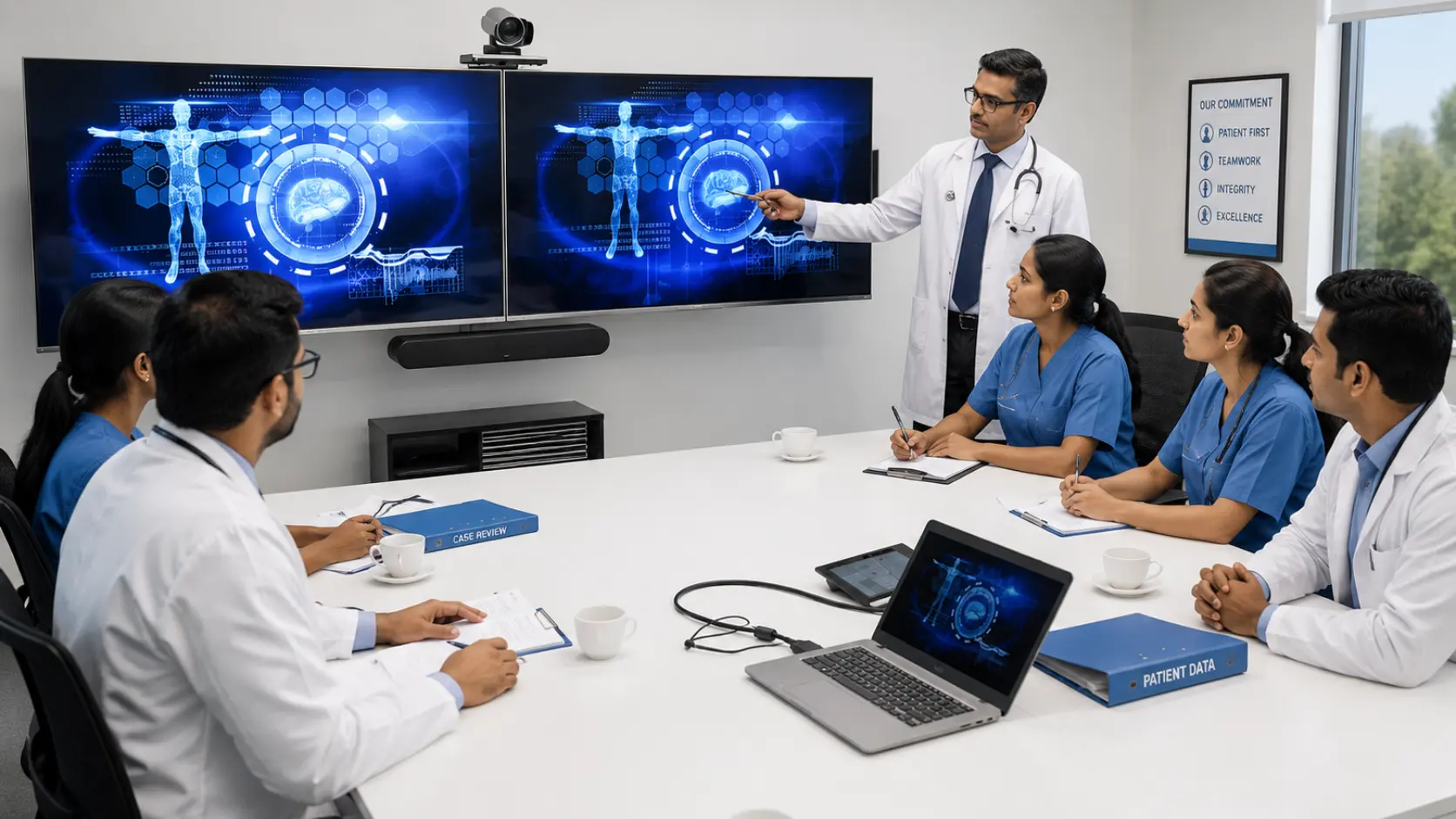
Hospital teams no longer gather only in fixed meeting rooms to discuss cases. Patient care now moves across operating theatres, imaging suites, wards, and remote links.
Read more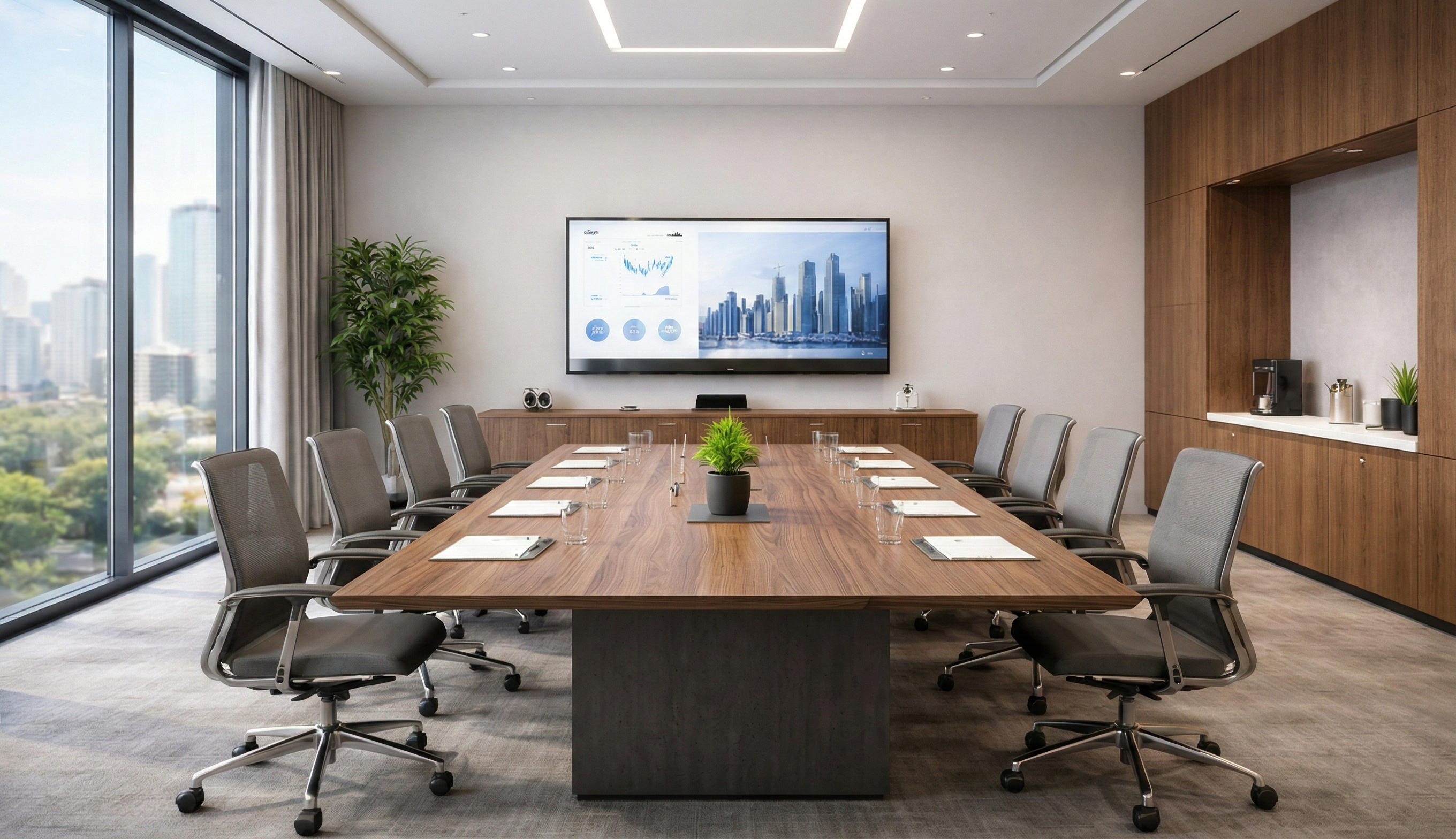
Rethink the standard meeting room. Learn how finance reviews, board updates, and cross-region meetings need different AV design and spatial intent. Does every meeting room in your office look the same? Same table. Same chairs. Same screen. Same camera. Now ask yourself. Do all your meetings behave the same way? Yet most enterprises replicate one […]
Read more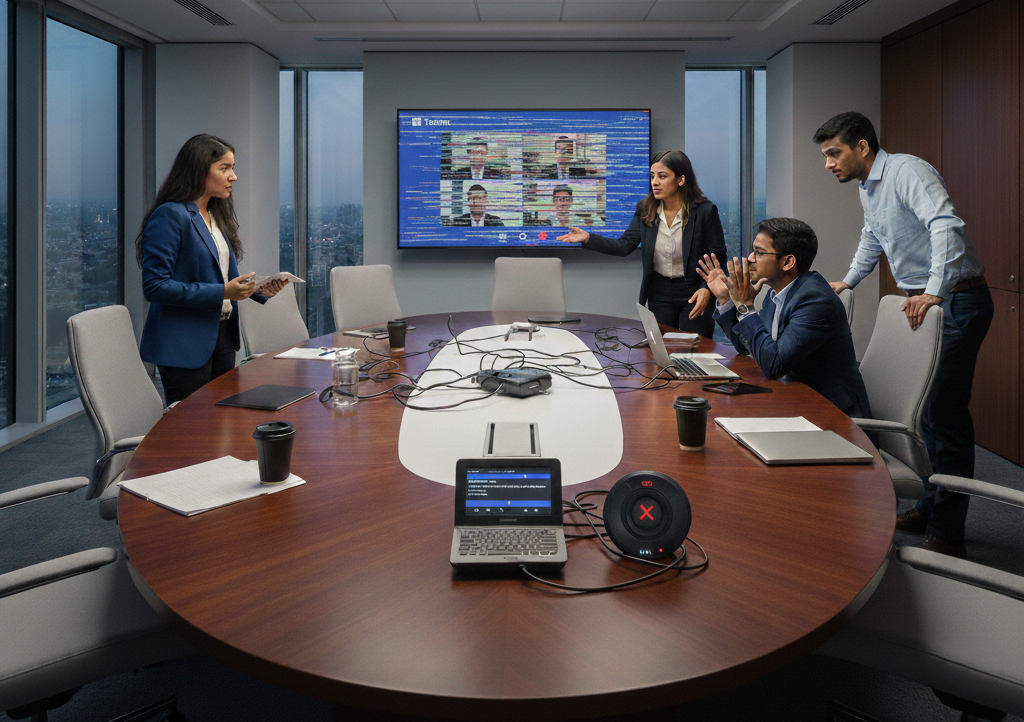
Why leadership conversations fail due to room design. Learn how audio delay, eye-line gaps, and AV fatigue weaken executive decisions. Have you noticed this pattern? The strategy looks solid on paper. The leaders agree in pre-reads. The numbers align. Then the meeting begins, and something shifts. People repeat points. Someone asks to restate a question. […]
Read moreCopyright @ 2026 Resurgent. All rights reserved.