Home >>
Blogs
>>
Why Meeting Room Failures Are An Operations Challenge
Why Collaboration Infrastructure Is Quietly Becoming an Operations Problem
Not every meeting room problem is caused by technology. Discover how operational inefficiencies can disrupt collaboration, productivity, and business outcomes.
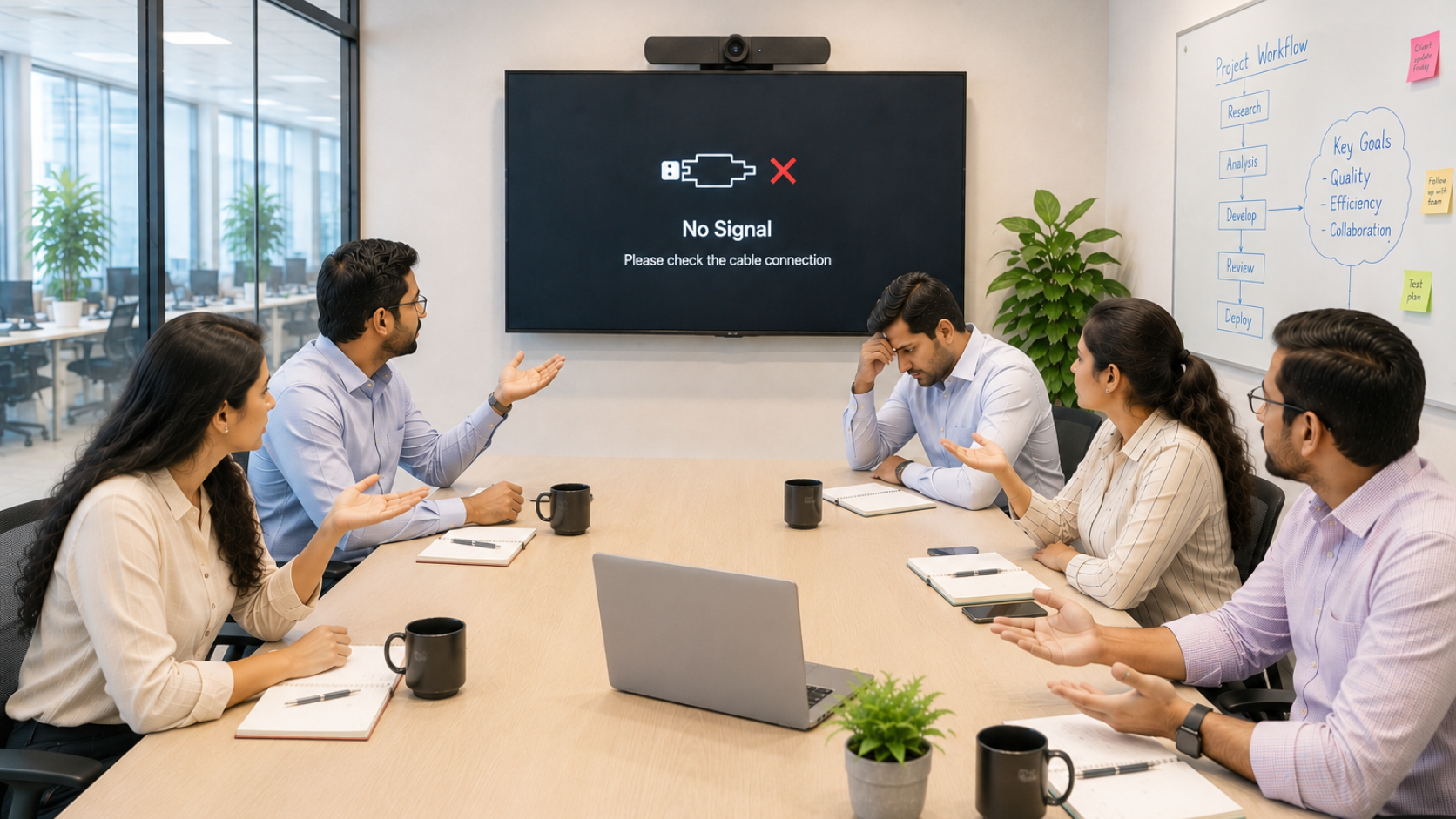
You walk into the office. The screen stays black. The microphone creates loud feedback. Your team sits and waits. The meeting starts late. This happens every week. You lose money. You lose focus. Everyone feels the pressure.
Does this sound familiar?
Most companies blame the technology. They call the IT department. The team comes in. The team fixes the cables. The team resets the system. The meeting proceeds. Everyone thinks the problem ends there. But the problem returns the next day. This cycle repeats. You think the issue involves bad hardware. You think the issue involves poor setup.
You are wrong. The issue involves your operations.
Collaboration infrastructure has moved beyond simple technical support. Your meeting spaces now act as the heartbeat of your daily business. When the heartbeat stops, the business struggles. You need to stop viewing meeting rooms as IT assets. You need to start viewing meeting rooms as operational assets.
The Shift From IT To Ops
IT departments focus on security. IT departments focus on networks. IT departments focus on infrastructure. These priorities make sense. Keeping data safe matters. Keeping the internet fast matters. But IT teams often lack the time to manage daily user behavior. IT teams often lack the time to manage workflow.
Operations teams focus on people. Operations teams focus on processes. Operations teams focus on efficiency. This is where collaboration lives. When a meeting room fails, the failure ruins the flow of work. The failure ruins the communication. The failure ruins the morale.
Consider the difference in focus.
IT Perspective:
Is the internet working?
Is the software patched?
Are the security protocols active?
Does the hardware turn on?
Operations Perspective:
Does the team know how to start the meeting?
Is the room scheduled correctly?
Does the audio quality allow for clear speech?
Does the room seating fit the group size?
Is there a person available to help if the system freezes?
The IT team provides the tools. The Operations team ensures the tools provide value. When you ignore this distinction, your business suffers.
The Three Pillars of Operational Failure
Many businesses struggle with the same three problems. These problems start with the lack of operational oversight.
1. Scheduling Disasters
You have likely seen this. A team books a room. Another team enters the room. Both teams have a reservation. The calendar software glitched. The system double-booked the space. Nobody wins. The confusion wastes ten minutes. People lose their train of thought.
Scheduling represents an operational challenge. You need a system that integrates with your calendar. You need a system that prevents double-booking. You need a system that updates in real time. If your staff cannot book a space with ease, the technology fails before the meeting starts.
2. Escalation Flow
When the technology fails, who do you call? Many companies rely on an email ticketing system. You submit a ticket. You wait. You wait longer. The meeting finishes before the help arrives.
This process is broken. You need an escalation flow that matches the speed of the meeting. You need an immediate path to support. You need a technician who knows the specific room configuration. You need a partner who understands your business goals. When you treat support as a generic IT ticket, you accept slow solutions.
3. Training Delivery
You buy the best equipment. You install the best displays. You add the best microphones. But the team does not know how to connect. The team struggles with the cables. The team struggles with the touch panel. The frustration builds.
Training is not a one-time event. Training is an operational necessity. New employees join. Technology updates. Work habits change. If your team does not understand the setup, the hardware provides zero value. You need a plan to keep skills sharp.
Executive Coordination
Executive meetings require a different standard. You cannot afford technical hiccups during a board meeting. You cannot afford audio issues during a client pitch. These moments define your company’s reputation.
Executives need white-glove service. This means a technician checks the room before the meeting. This means the system stays ready for the specific presentation. This means the lighting looks professional. This means the sound quality remains crisp.
When you treat executive meetings as standard IT tickets, you take unnecessary risks. You need a dedicated focus on these high-stakes environments. You need to anticipate problems. You need to prevent problems.
The Comparison Table
Look at how the two approaches differ in the table below.
Area
IT Approach
Ops Approach
Room Booking
Focus on server uptime
Focus on user experience
Hardware
Focus on model numbers
Focus on ease of use
Support
Focus on ticket queue
Focus on rapid resolution
Training
Focus on manual distribution
Focus on hands-on practice
Planning
Focus on hardware life cycle
Focus on workflow efficiency
Why Your Business Needs a Partner
You run a business. Your time belongs to your customers. Your time belongs to your strategy. Your time does not belong to fixing cables. You need a partner who manages the complexity. You need a partner who understands the operational side of AV.
Resurgent specializes in this area. We design integrated AV solutions for corporate environments. We understand that your needs extend beyond a single room. We understand that your team works across locations. We understand that your work culture remains hybrid.
Our solutions handle the heavy lifting. We look at the room capacity. We look at the connectivity. We look at the sound and the lighting. We look at the scheduling. We customize the setup to match your specific needs.
When your team gathers, the system performs. You experience the following benefits with our approach:
Consistent experience across all global locations.
We offer tools that make the operational side of your business easier. We provide the following hardware and software to ensure your success:
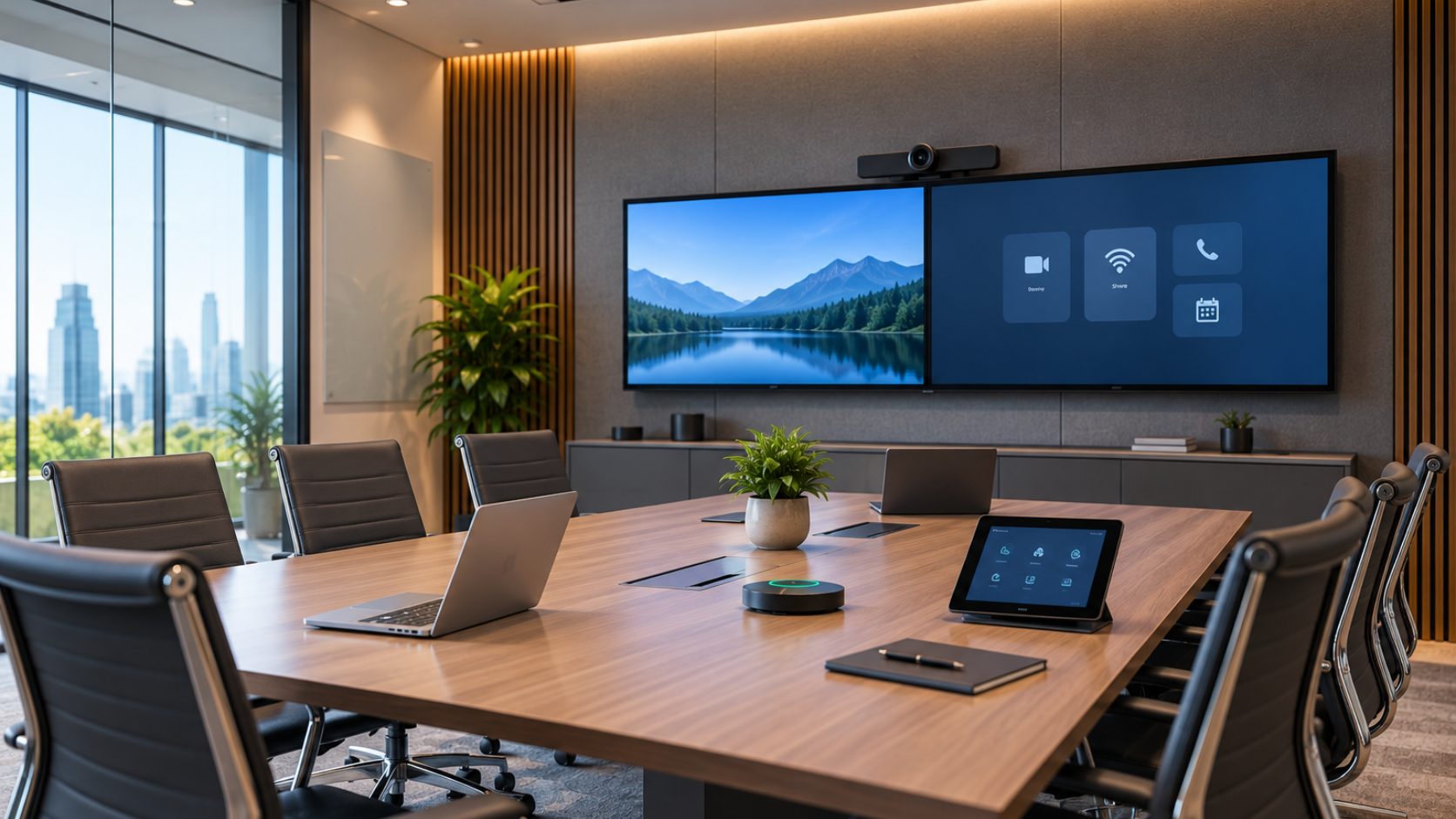
High-resolution LED displays: We ensure your presentations look sharp. The visual quality matters when your team reviews data.
Audio through ceiling speakers: We eliminate the need for bulky equipment. The sound fills the room. Everyone hears every word.
Ceiling or table-mount microphones: We pick up audio clearly. Remote participants feel like they occupy the room with you.
Cable cubbies for wired presentation: We keep the table clean. We provide the connections you need within reach.
Advanced wireless presentation systems: We remove the clutter. Your team connects in seconds.
Room scheduling panels: We stop the double-booking. You see the room status at a glance.
Room control with touch-based interfaces: We simplify the complexity. One button starts the meeting. One button manages the room.
2. Making the Change
You have the power to change your meeting culture. You have the power to stop the frustration. The change starts with a new mindset. Stop looking at your meeting room as a pile of hardware. Start looking at the meeting room as a place where work happens.
Assess your current workflow. Identify the friction points. Do people struggle to connect? Do meetings start late? Does the technology confuse your staff? These are not IT issues. These are operational gaps.
Fill the gaps with the right support.
Your team deserves a better way to collaborate. Your clients deserve a better way to connect. Your executives deserve a better way to present.
Take the first step. Audit your meeting spaces. Let our team evaluate your current setup. Let us design a solution that bridges the gap between your technology and your goals.
We help organizations stay agile. We help your teams connect across multiple locations. We help you focus on the work that matters.
Contact us today. Let us transform your meeting rooms from a source of frustration into a foundation for success. Your operations deserve the upgrade. Your team will thank you.
FAQs
Why treat meeting rooms as an operations issue instead of an IT one? It shifts your focus from just fixing broken hardware to actually improving your team’s daily workflow and meeting experience.
What are the biggest red flags that my meeting setup is failing? Frequent meeting delays, double-booked rooms, and team members constantly fighting with cables or connections are clear signs of trouble.
How should I manage tech for high-stakes executive meetings? Use a white-glove approach. Have a technician test the audio and video setup before the meeting starts to prevent any technical hiccups.
Why is our expensive equipment still hard to use? Gear is useless if your team does not know how to operate it. You need ongoing training, not just a one-time installation.
How can Resurgent help improve our collaboration setup? Resurgent designs custom AV solutions that fix your specific scheduling, sound, and connectivity issues to keep your teams connected and agile.
You start with a few meeting rooms. Each one gets its own display, camera, speaker, and control panel. Someone installs the gear. Someone else books a room and hopes the call works. That approach works when you have ten rooms, often supported by local audio-visual service providers. It breaks when you have 200+ rooms across […]
The AV System Is Working. So Why Is the Experience Still Breaking?
Your meeting room shows green lights on every device. The control panel responds. The network reports no faults. Still, the first five minutes of every call feel broken.
Regular AV health checks prevent downtime, improve user experience, and reveal upgrade opportunities that deliver measurable ROI without new installs. Many AV providers still lead with installation pitches. New displays. New microphones. New control systems. But clients are not always asking for new technology. They are asking for reliability. They want every meeting, class, or […]