To get the best out of their employees, employers must nurture a productive environment. In addition to the mainstream resources, certain (often overlooked) factors subconsciously drive motivation in the workers. One such striking factor is – Lighting. Everything from colour temperature to the type of light source that employees are regularly exposed to influences their productivity. Let’s understand how.
What Happens If There Is Improper Lighting in a Workplace?
It is generally known that working in dark spaces can harm your eyes, but the impact of improper lighting is much more than that.
There are two ways in which workplace lighting can go wrong – dim lighting and harsh lighting. In dim lighting, eyes experience strain which may lead to headaches. It can also cause drowsiness and lack of focus, directly or indirectly affecting employees’ productivity. Harsh lighting also has the same impact, making it hard for employees to focus on work and even triggering migraines in some cases.
So, it’s evident how crucial it is to regulate lighting in a workplace, especially in times when most work is screen-based.
Tips for Optimal Lighting Setup in Modern Offices
Here is what you can do to achieve optimal lighting in workspaces and provide your employees with a productive environment by supporting their mental vitality, acuity, and alertness.
1. Identify the Best Places for the Light Source
This sounds obvious, yet it’s not so common. Even if the lighting setup is optimum, the location of setting up the light sources can make a massive difference in productivity. Businesses that rely on intricate, detailed, or close-up operations should especially focus on this aspect. In addition to the overall lighting, a local light source may also be essential to avoid poor lighting postures and strain on the eyes.
2. Avoid Glare
Unwanted glare from reflective surfaces can cause unnecessary strain on the eyes. So, in addition to adequate lighting, modern offices should also be careful about light reflections and glare.
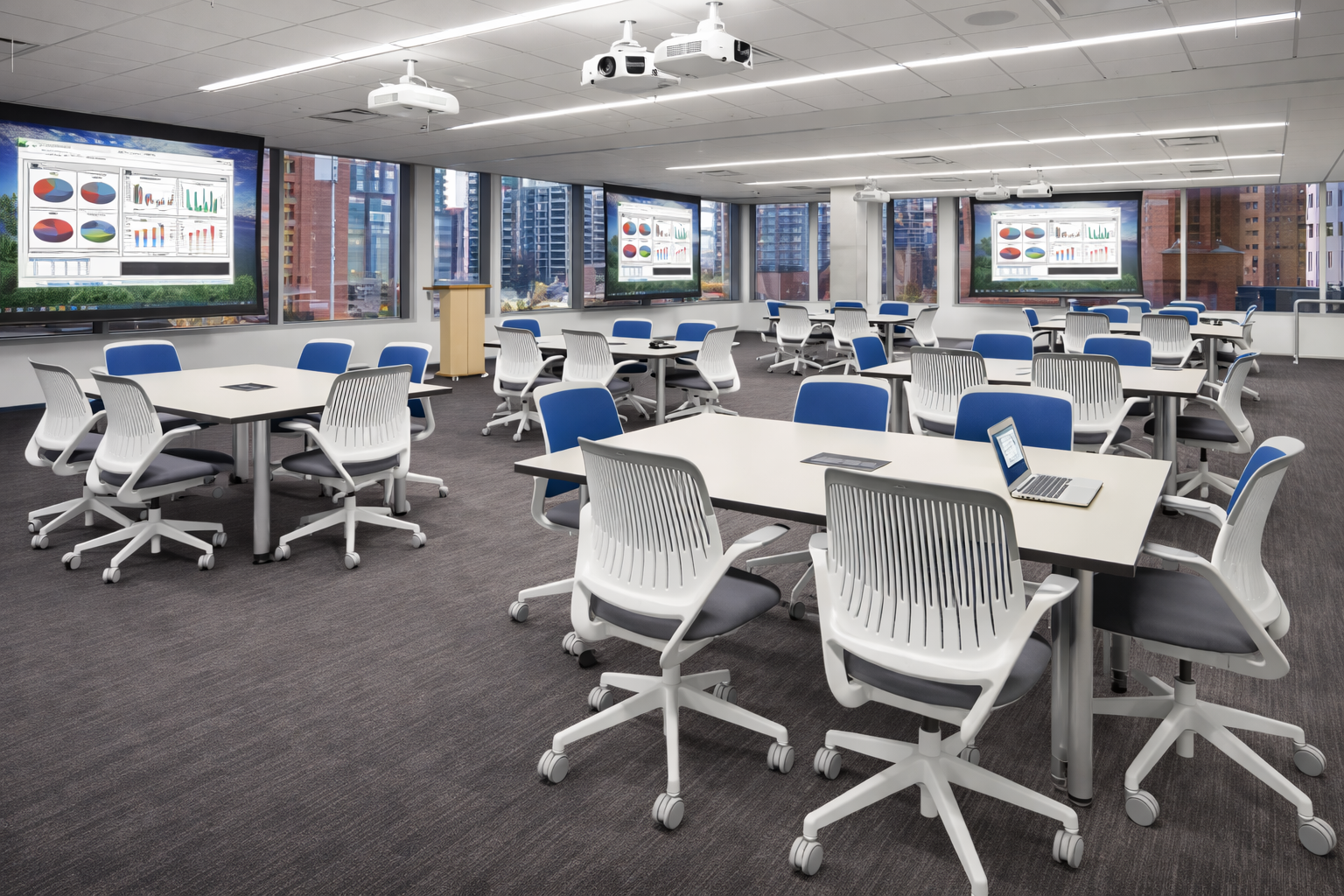
If a light source is placed directly in front of a reflecting surface, it can be distracting and make it difficult for employees to focus. For example, while using projectors during presentations, other light sources should be dim to avoid glare around the main screen. The last thing the business would want is for the employees to sit through the critical presentations in discomfort.
For such cases, integrated lighting systems are a great solution. They automate lighting setup based on the requirement, saving you the pain of manually configuring each light source for every meeting.
3. Regulate the Light Intensity According to the Need
The influence of good lighting in daily life is often underestimated. Today, we spend most of our time working on screens in closed spaces, exposing ourselves to a different degree of harsh and dim lights. We don’t realise that continuous exposure to such lighting setups can cause mental and physical health issues impairing our focus, accuracy, and overall productivity.
The key is maintaining a balance of natural and artificial light sources — precisely where tailored lighting solutions like sensor-based lighting systems and lighting controllers can help.
We understand that getting natural light in closed spaces might not always be possible. In such scenarios, blue-enriched lights are also a great option. Blue-enriched lights are cooler to the eyes and balance melatonin levels. Hence, they reduce fatigue and daytime sleep tendencies. Besides, they can be great for brainstorming sessions where businesses want the employees to feel invigorated. In fact, one of the studies at the University of Greenwich backed the use of “blue-enriched light bulbs,” as they reported workers feeling happier and more alert.
How Can System-Integrated Smart Solutions Help?
Digital integration in workplace lighting setup is revolutionising the corporate sector. From smart lighting to sensor-based systems, smart methods have taken over the visual solution and for all good reasons.
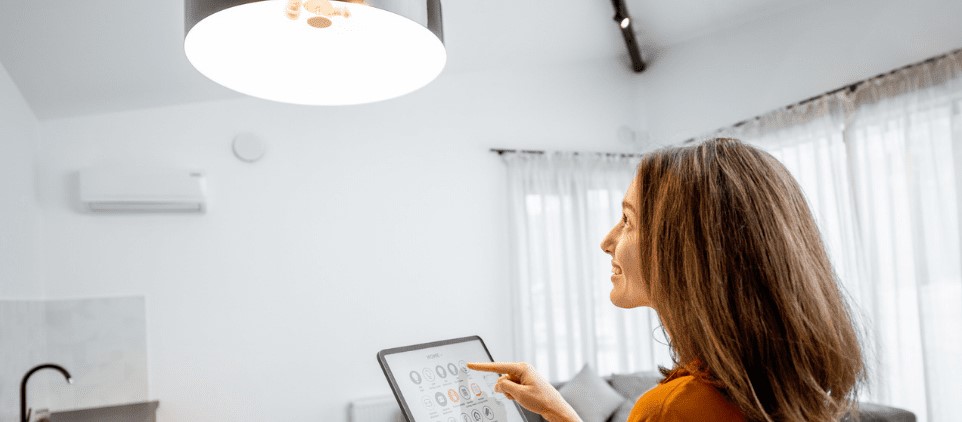
System-integrated smart lighting control solutions help businesses stay ahead in the game and always be prepared. With these solutions, enterprises can even pre-define the lighting setup specific to different workspaces for meetings, presentations, and conferences. As a result, their employees don’t have to worry about setting things manually, and they can have their A-game on at all times.
Get Experts to Help You!
Given the necessity to nurture workplace productivity, it’s high time to invest in a system-integrated solution for automated lighting since manual systems are insufficient to keep pace with modern workplace needs.
Boost your team productivity with our human-centric approach to AV solutions and cutting-edge technology, well-suited for all corporate sectors. Connect with our team of experts to know more.