Hybrid Meeting Challenges: Why New Managers Struggle?
Learn why new managers struggle in hybrid team discussions and how to manage attention, participation, and authority across mixed work setups.
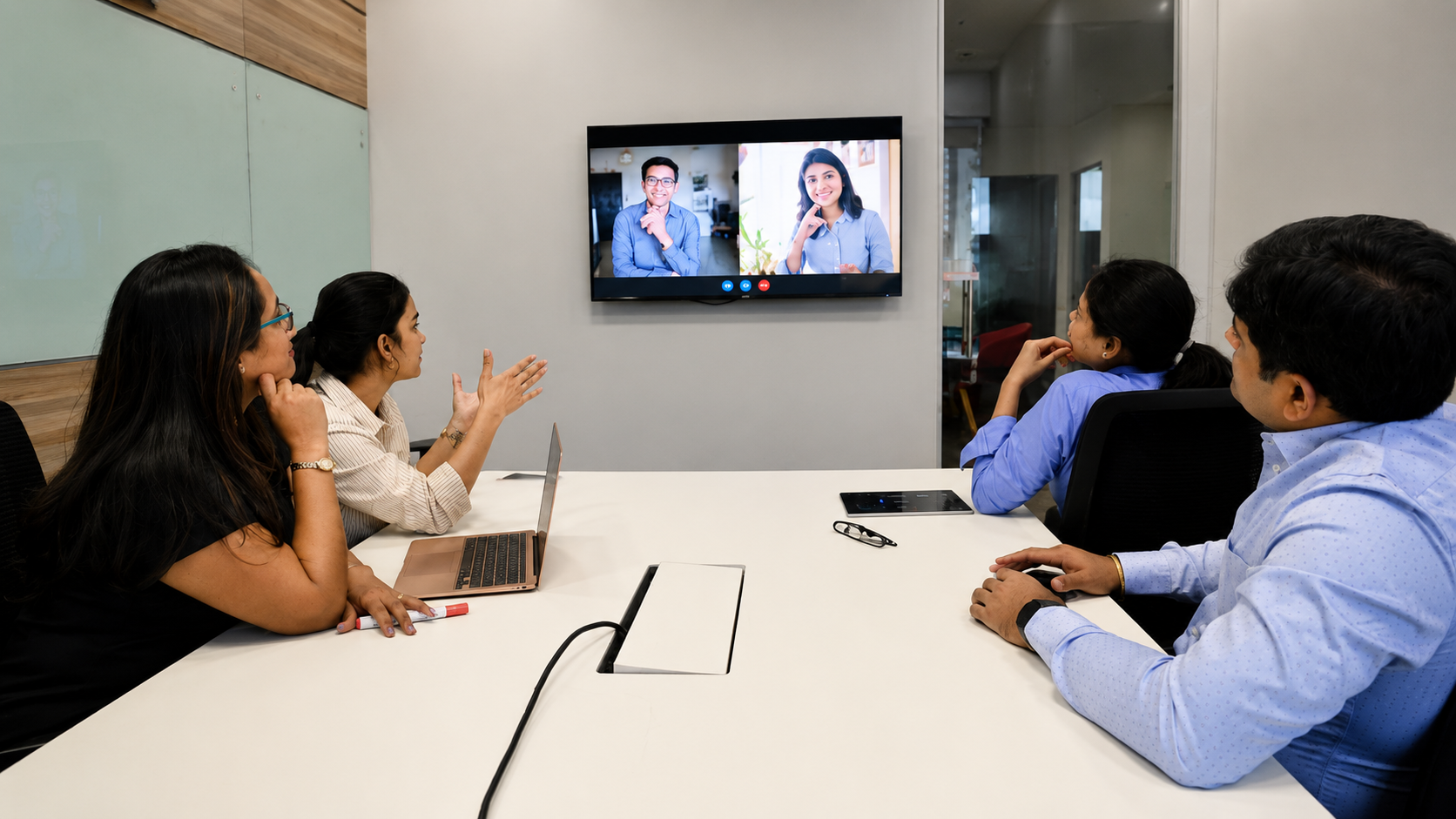
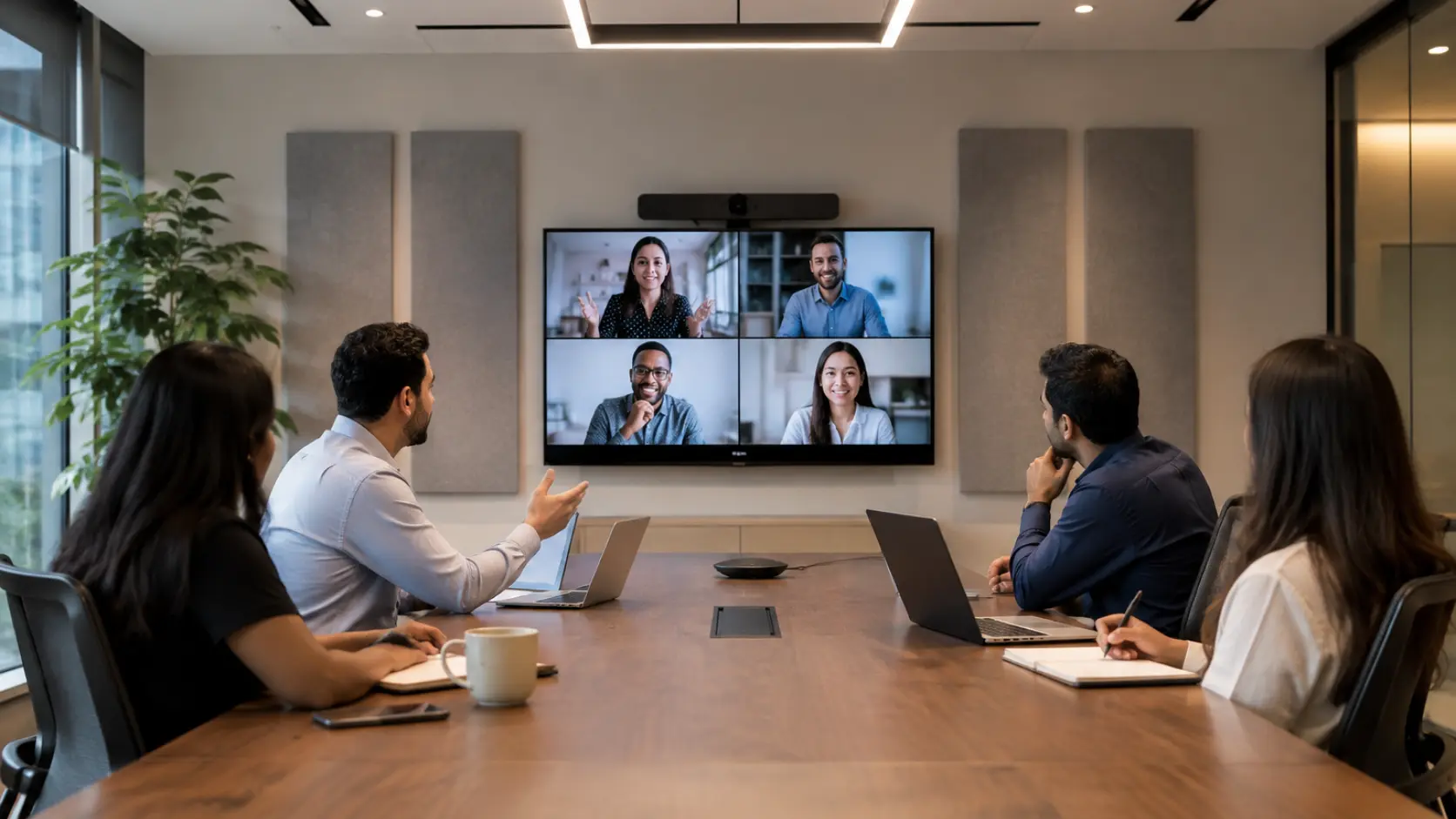
You step into your first management role. You prepare for meetings. You know the agenda. You understand the goals. Then the meeting starts. Half the team sits in a room. The rest join from screens. Some cameras are off. A few people speak over each other. Someone drops off due to network issues. When you pose a question, the room falls silent.
You pause.
Many first-time managers experience pressure at this point. Not because they lack skill. Because the environment itself is harder to control. Hybrid discussions change how teams communicate. They split attention. They blur authority. They make participation uneven.
Let’s unpack the ‘why’ behind this bottleneck and, more importantly, how you can fix it today.
The Hybrid Setup Changes the Rules
In a physical meeting, you see everything. Body language. Eye contact. Side conversations. In a virtual meeting, you rely on screens. In a hybrid configuration, you handle both concurrently.
This creates a gap.
People in the room interact faster. They interrupt more. They pick up cues instantly. Remote participants lag behind. Even a one-second delay changes the flow.
As a new manager, you must control two different communication speeds. That is not easy. Add now a more comprehensive change in teamwork.
77% of new job advertisements examined in Q1 2026 are entirely on-site, contrasted with 19% hybrid and 4% totally remote. It shows that flexibility has not disappeared, even if it represents a fall from the peak of flexible employment in previous years. (Source)
What does this mean for you? The world in which you operate is neither entirely in-person nor entirely remote. You are in charge of a diverse and constantly changing workplace. Some teams return to the office. Others stay distributed. Many operate in between.
So even if more roles move on-site, hybrid discussions remain part of your daily work. And that keeps the complexity alive.
The Attention Problem
Attention splits in hybrid meetings. People check emails. Some multitask. Others lose focus when they feel disconnected. You might think everyone listens. They are not.
Here’s what often happens:
In-room participants focus on each other
Remote participants feel like observers
Side conversations distract the group
Technical glitches break momentum
Now add your role. You must guide the discussion. Track responses. Notice who is engaged. Notice who is silent.
For a first-time manager, this feels overwhelming.
The Participation Gap
Hybrid meetings often create unequal participation. People in the room speak more. Remote participants hesitate. Why?
Fear of interrupting
Audio delays
Lack of visual cues
Feeling excluded from the room energy
You ask a question. The room responds quickly. Remote members stay quiet. You move forward. Later, you realize key inputs were missing.
This is not a people problem. This is a format problem.
Authority Feels Weaker
Authority in meetings is not about your title. It is about presence. In a physical room, presence is clear. You stand. You speak. You guide. In hybrid meetings, presence gets diluted.
Remote participants see you through a screen. In-room participants split attention between you and others. You give instructions. Some follow immediately. Others miss them. You repeat yourself. This weakens your control over the discussion. For new managers, this creates doubt:
“Am I being clear?”
“Am I leading this well?”
The Visibility Challenge
You cannot manage what you cannot see. In hybrid discussions:
Cameras are off
Faces are small on screen
Reactions are delayed
Some people stay silent throughout
You miss signals. Someone disagrees but says nothing. Someone feels confused but does not ask. Someone disengages completely.
In a physical setup, you would catch this. In hybrid, you often do not.
Decision-Making Slows Down
Hybrid meetings often take longer to reach decisions. Why?
Inputs come in unevenly
Clarifications repeat
Technical issues interrupt flow
People hesitate to speak
You try to summarize. Someone says they missed a point. You go back. Momentum drops.
You are under pressure to keep things going as a new manager. But speed and clarity do not align easily in hybrid setups.
A Simple Comparison
Here is how traditional and hybrid discussions differ:
Aspect
In-Person Meeting
Hybrid Meeting
Attention
Focused
Split
Participation
Balanced
Uneven
Authority
Strong presence
Diluted presence
Communication Speed
Instant
Mixed speeds
Visibility
High
Limited
Decision Flow
Faster
Slower
This table shows the core issue. Hybrid adds complexity at every level.
What New Managers Often Get Wrong
Many new managers attempt to “fix” individuals in the face of these difficulties. They push harder. They speak more. They rush decisions. This backfires. Common mistakes include:
Ignoring remote participants
Allowing in-room dominance
Moving ahead without full input
Overloading meetings with information
Not setting clear speaking rules
The result? Lower engagement. Missed insights. Frustration.
What Works Better?
You do not need perfect control. You need structured control. Here are practical ways to manage hybrid discussions:
Set Clear Ground Rules
Start every meeting with simple rules. For example:
Raise a hand before speaking
Keep cameras on when possible
Use chat for quick inputs
Avoid side conversations
Keep rules short. Repeat them often. Consistency builds discipline!
Balance Participation Actively
Do not wait for people to speak. Call on them. Try this:
“Let’s hear from the remote team first.”
“Riya, what’s your view?”
This signals inclusion. Also, rotate who speaks first in each meeting.
Use Structured Agendas
A loose agenda fails in hybrid setups. Break discussions into clear sections:
Topic
Owner
Time limit
Expected outcome
Share the agenda before the meeting. Stick to it. This reduces confusion and keeps focus sharp.
Pause More Often
Silence feels uncomfortable. Use it anyway. Wait a short while after posing a question. Remote participants need time to respond. If no one speaks, prompt gently. This improves participation without pressure.
Summarize Frequently
Do not assume everyone is aligned. After key points, say: “Here’s what we agreed so far.” Keep summaries short. This helps people who missed parts of the discussion.
Use Visual Aids
People understand better when they see information. Use:
Shared screens
Slides
Live documents
This keeps both in-room and remote participants aligned.
Assign a Co-Facilitator
If possible, get support. One person leads the discussion. Another tracks chat, time, and participation. This reduces your load. It also improves meeting quality.
Close with Clear Actions
End every meeting with clarity. State:
Who does what
By when
What success looks like
Write it down. Share it. No ambiguity.
Why Technology Matters More Than You Think
Hybrid meetings depend heavily on audio and visual quality. If the setup fails, communication fails. Consider this:
A delayed audio feed disrupts conversation flow
A low-quality camera reduces presence
Poor lighting makes expressions hard to read
Weak connectivity breaks focus
These issues seem small. They are not. They affect how people speak, listen, and decide.
How the Right Setup Supports New Managers
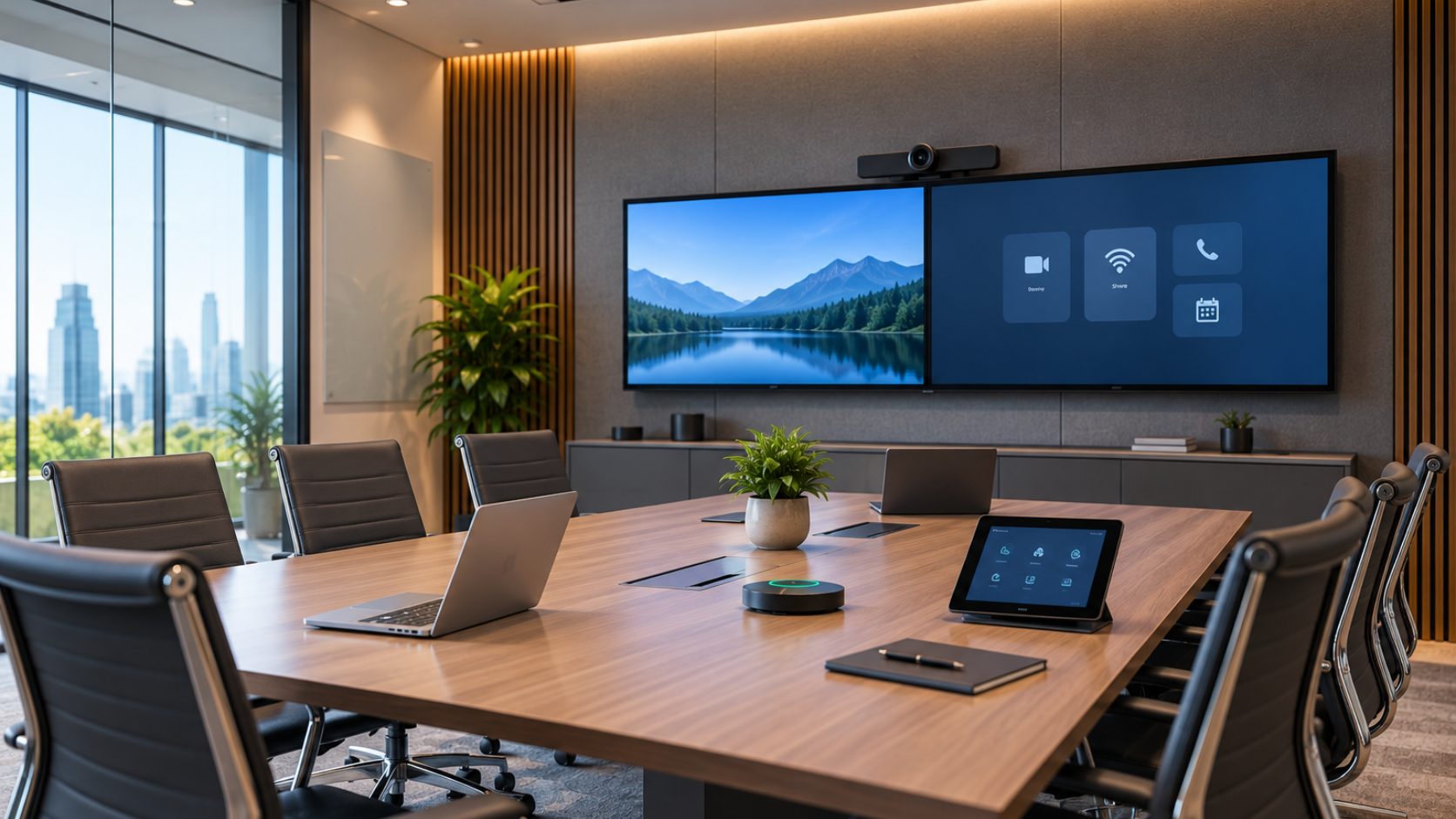
A strong AV setup reduces friction. It helps you focus on leading, not fixing technical issues. Here is what good systems provide:
Clear audio across the room and remote locations
High-quality video for better visibility
Seamless screen sharing
Stable connectivity across devices
Easy integration with collaboration tools
This creates a consistent experience for everyone. No one feels left out!
Where Resurgent AV Fits In
Hybrid work is not temporary. Teams will continue to operate across locations. You need systems that support this reality.
Resurgent AV designs AV solutions for modern workplaces. Our approach focuses on seamless communication across spaces. What this means for you:
Meeting rooms equipped for both in-person and remote participants
Integration with tools like Microsoft Teams, Cisco WebEx, Zoom, and more
One-touch collaboration for faster meeting start times
High-quality audio and video for clear communication
We also design solutions for different spaces:
Boardrooms
Meeting rooms
Training rooms
Large spaces like cafeterias
Collaboration areas
Each solution addresses a specific need. Together, we create a unified communication environment.
Ready to Improve Your Hybrid Meetings?
If your teams struggle with hybrid discussions, the issue might not be your people. It might be your setup. Resurgent helps organizations build AV environments that support clear communication, better participation, and faster decisions. Contact Resurgent AV to design meeting spaces that connect your teams across locations and devices, and help your managers lead with confidence!
FAQs
Why are hybrid meetings tougher for new managers? Because they have to manage both the room and the screen at once, which makes attention, participation, and control harder to balance.
Why do remote team members speak less in hybrid meetings? They often feel less visible, face audio delays, and struggle to jump into fast in-room conversations.
How can managers make hybrid meetings more inclusive? Use clear agendas, call on remote attendees directly, and pause longer after asking questions.
Does AV setup really impact meeting quality? Absolutely. Poor audio and video make collaboration harder and reduce engagement fast.
How does Resurgent AV improve hybrid meeting spaces? Resurgent AV builds AV-enabled meeting environments that help teams communicate clearly and collaborate better across locations.
You start with a few meeting rooms. Each one gets its own display, camera, speaker, and control panel. Someone installs the gear. Someone else books a room and hopes the call works. That approach works when you have ten rooms, often supported by local audio-visual service providers. It breaks when you have 200+ rooms across […]
How to Design Speech Intelligibility in Modern Meeting Rooms
How to Improve Speech Intelligibility in Modern Meeting Rooms Modern meeting rooms are no longer simply spaces with a display and a conference speaker. With hybrid collaboration, remote participants, video conferencing, and distributed teams becoming part of everyday business, clear and intelligible speech has become one of the most important factors in meeting room design. […]
The AV System Is Working. So Why Is the Experience Still Breaking?
Your meeting room shows green lights on every device. The control panel responds. The network reports no faults. Still, the first five minutes of every call feel broken.