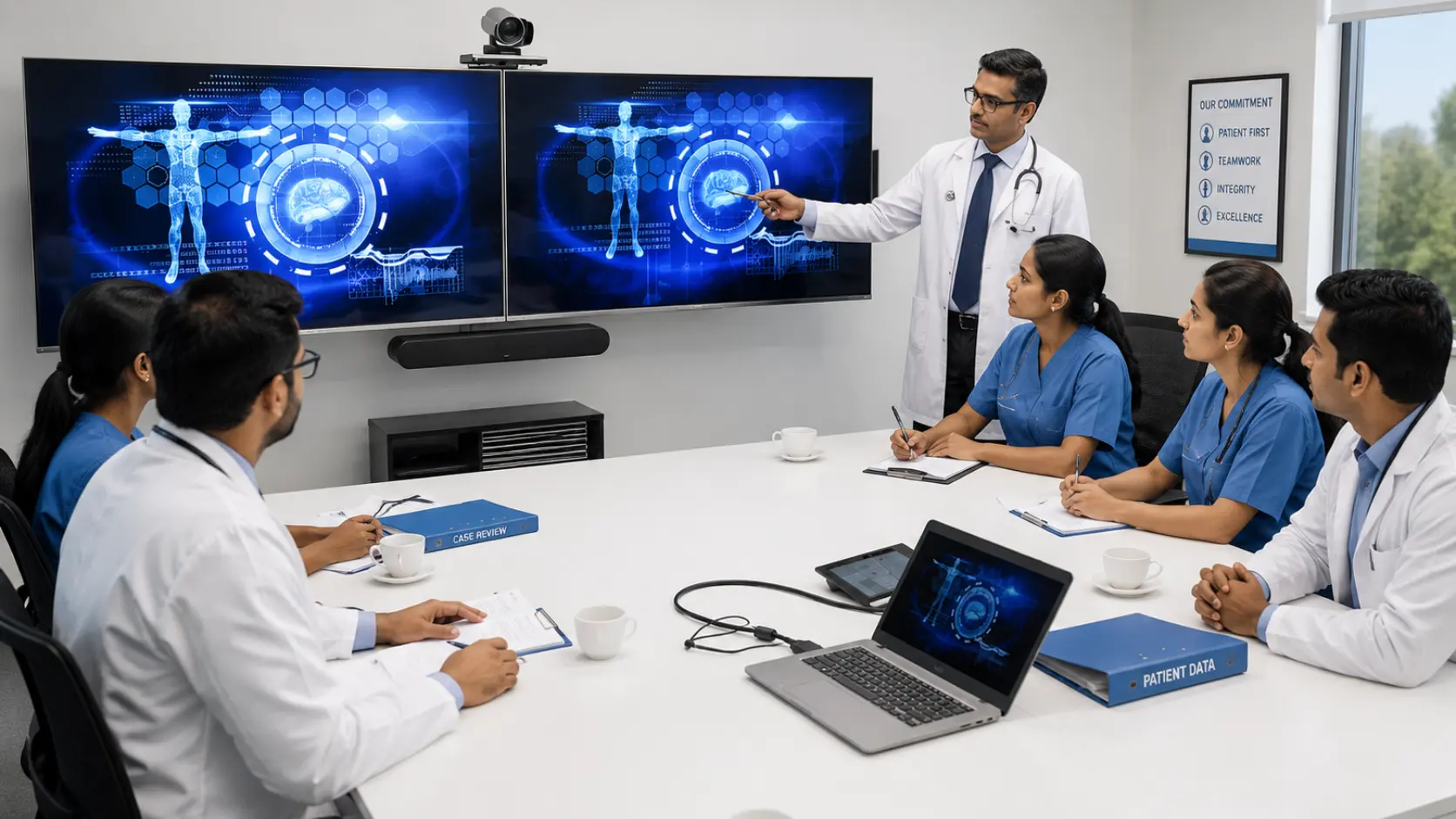
Hospital teams no longer gather only in fixed meeting rooms to discuss cases. Patient care now moves across operating theatres, imaging suites, wards, and remote links. Multidisciplinary reviews happen at the bedside or over live video. Specialists join from other cities. Training happens while surgery is underway.
Your collaboration spaces need to match this reality. Spaces built for standard meetings fall short when the work follows the patient.
Why Clinical Workflows Moved
Care delivery changed because patients and technology demanded it.
- Faster diagnostics require immediate input from multiple experts.
- Telemedicine brings distant specialists into local decisions.
- Live case discussions train residents without delaying treatment.
Consider a typical complex case. A patient arrives with trauma. Imaging starts at once. Surgeons, radiologists, and anaesthetists review scans together while the patient moves toward the theatre. Decisions cannot wait for a scheduled conference slot. The team works where the patient is.
Remote support adds another layer. A rural hospital needs a cardiac specialist. The specialist views live imaging and joins the discussion from another site. Latency or poor image quality risks the outcome. Standard meeting rooms with basic screens do not meet this need.
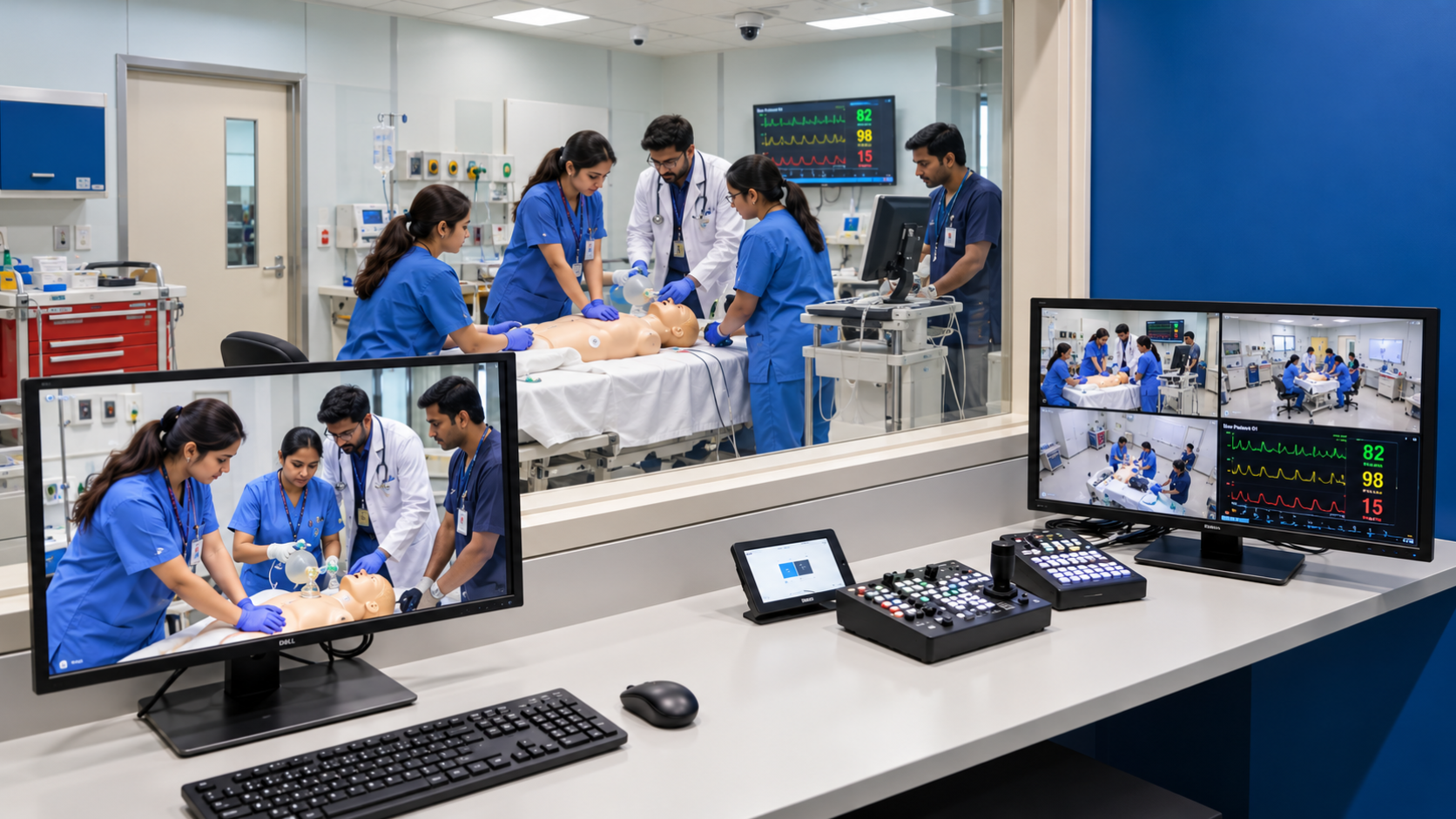
Training also shifted. Residents learn by watching real procedures. Connecting the operating theatre to a teaching space lets them observe without crowding the sterile field. The connection must stay clear and reliable.
These changes are practical, not theoretical. They affect speed of care, accuracy of diagnosis, and staff development every day.
What Collaboration Spaces Must Deliver Now
Spaces should support patient pathways rather than fixed agendas. That means flexible layouts, medical-grade displays, and reliable connections that work across locations.
Key requirements include:
- Displays that handle medical images without loss of detail
- Cameras and microphones that capture clear audio & video in busy environments
- Zero-latency transmission so remote experts see the same view as the local team
- Systems that integrate with existing hospital networks and imaging equipment
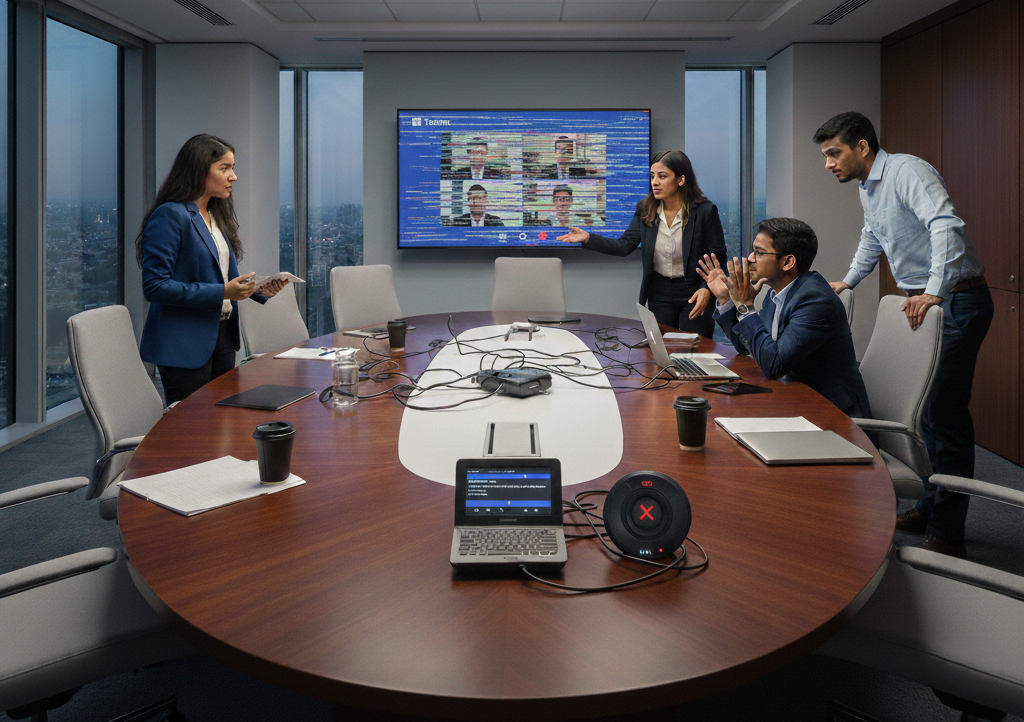
- Easy controls so clinical staff focus on patients, not technology
A space that meets these points lets teams review cases where they occur. It supports remote input without travel delays. It turns live procedures into teaching moments.
Examples of Spaces That Fit the New Workflow
- Operation theatres need more than lights and tables. High-resolution cameras and displays let the surgical team share views with remote specialists or training rooms. DICOM-compliant screens show scans next to the live field. This setup speeds decisions during procedures.
- Medical imaging and diagnostics areas benefit from the same approach. Radiologists and clinicians view studies together on calibrated screens. Remote experts join the review without quality drop. Faster consensus reduces time to treatment.
- Remote specialist support works best when the AV link feels local. Clear audio, accurate colour, and stable connection let the distant doctor assess the patient as if present. Hospitals use this for stroke assessment, cardiology consults, and rare case discussions.
- Patient information systems and wayfinding improve when digital displays guide people clearly. Accurate maps and status updates reduce confusion in large facilities. Staff spend less time directing visitors and more time on care.
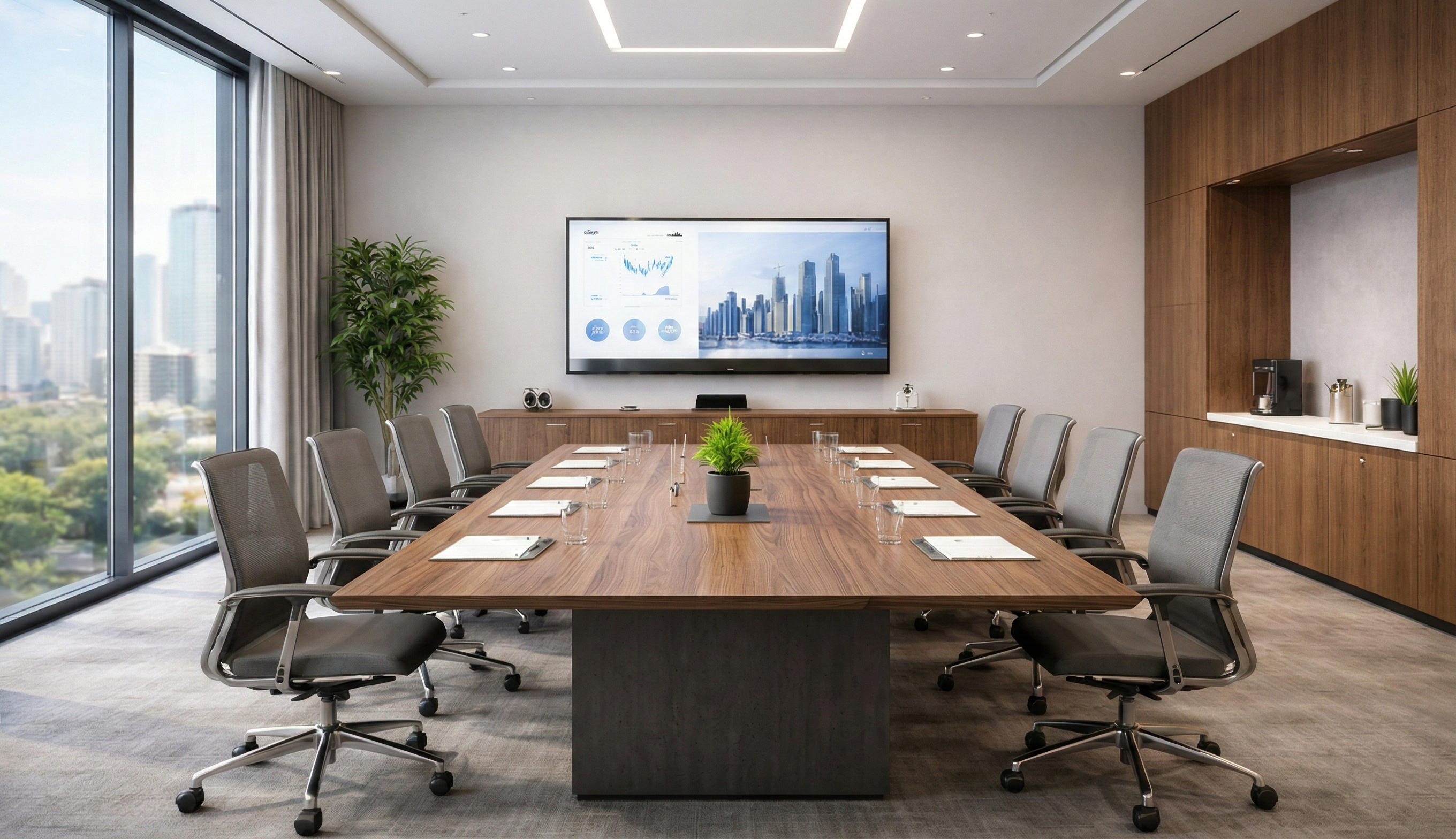
- Meeting and training rooms still matter, but their role expanded. They now link to live theatres and imaging suites. Residents watch procedures in real time. Teams hold case reviews with full image access. Presentation spaces host conferences that include overseas participants without quality loss.
Each of these areas supports a different stage of the patient path. The technology stays consistent so staff move between spaces without relearning systems.
Practical Benefits for Care Teams
- Better collaboration spaces produce measurable results. Faster decision-making shortens time from scan to treatment. Clear remote links bring specialist knowledge to more patients. Live connections improve training quality because learners see real cases rather than recordings alone.
- Hospitals report fewer delays when imaging reviews happen immediately. Teams avoid transferring patients solely for specialist opinion. Training programs expand because one procedure serves both care and education.
- Staff satisfaction rises when tools work without friction. Clinicians spend less time fighting technology and more time treating patients. Remote experts join more cases because the connection feels reliable.
Implementation Considerations
- Installing these systems requires planning. Medical-grade equipment must meet hospital standards for hygiene and reliability. Network capacity needs assessment so high-resolution video does not disrupt other systems. Staff training covers basic operation, so teams use the tools daily.
- Trade-offs exist. Higher quality displays and cameras cost more upfront. Maintenance plans must cover specialised equipment. Integration with existing electronic records and imaging archives takes time.
- Yet the alternative costs more over time. Delays from poor collaboration affect patient outcomes. Limited training access slows staff development. Isolation of remote sites reduces care quality.
- Start with the highest impact areas. Operation theatres and imaging suites often deliver the quickest returns. Expand to training rooms and remote links next. Measure results through decision times, training hours, and staff feedback.
How AV Solutions Support These Spaces
Effective systems use medical-grade displays and cameras. They support DICOM standards so images appear with clinical accuracy. Zero-latency transmitters keep remote views in sync. Integrated controls simplify operation across rooms.
These tools improve patient care by enabling faster decisions and better diagnoses. They expand telemedicine reach so local teams access global expertise. Training improves when live streams connect theatres to classrooms. Multiple stakeholders join conferences or consultations without quality loss.
Resurgent provides integrated AV solutions built for hospitals and medical institutions. The focus stays on precision and clarity. Systems cover operation theatres, medical imaging and diagnostics, remote specialist support, patient information systems and wayfinding, meeting and training rooms, and presentation spaces.
Key features deliver direct value:
- High-quality audiovisual setups that speed decision-making and support telemedicine
- Medical-grade equipment and DICOM-compatible technology that connect theatres to training spaces for real experience
- Integrated solutions that link overseas patients, specialists, and conference participants effectively
Contact Resurgent today to review your current spaces and plan updates that match clinical workflows. Align your collaboration environments with the way care actually happens.
FAQs
1. What makes collaboration spaces different in modern hospitals?
Spaces now follow patient pathways instead of fixed meeting schedules. Teams need clear medical images, live remote links, and reliable connections right where care happens.
2. Do standard meeting rooms still work for clinical reviews?
They fall short for live case discussions and remote specialist input. Medical-grade displays and zero-latency links deliver the clarity teams need during active care.
3. How does better AV support training without disrupting surgery?
Live streams connect operating theatres to training rooms so residents observe real procedures. Clear audio & video keep the focus on learning while the sterile field stays free.
4. Why prioritise operation theatres and imaging areas first?
These spaces drive the fastest gains in decision speed and specialist access. Clear image sharing and remote joins cut delays for complex cases.
5. How do I start updating my hospital’s collaboration spaces with Resurgent?
Contact Resurgent to review your current setup and plan medical-grade AV solutions for theatres, imaging, remote support, and training rooms.
Written By
Madhusudhan VC
(AVP – Customer Achievement)