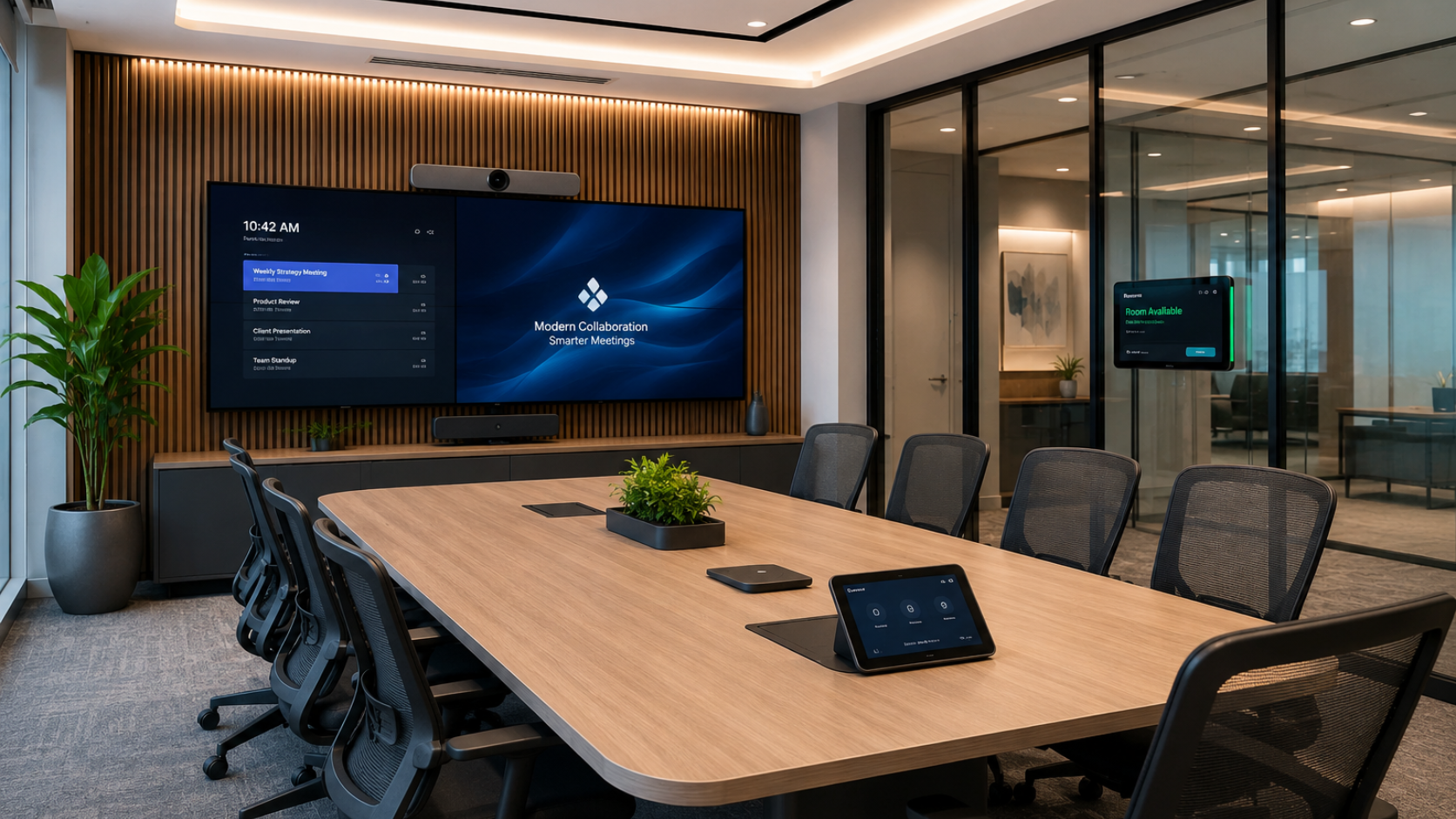
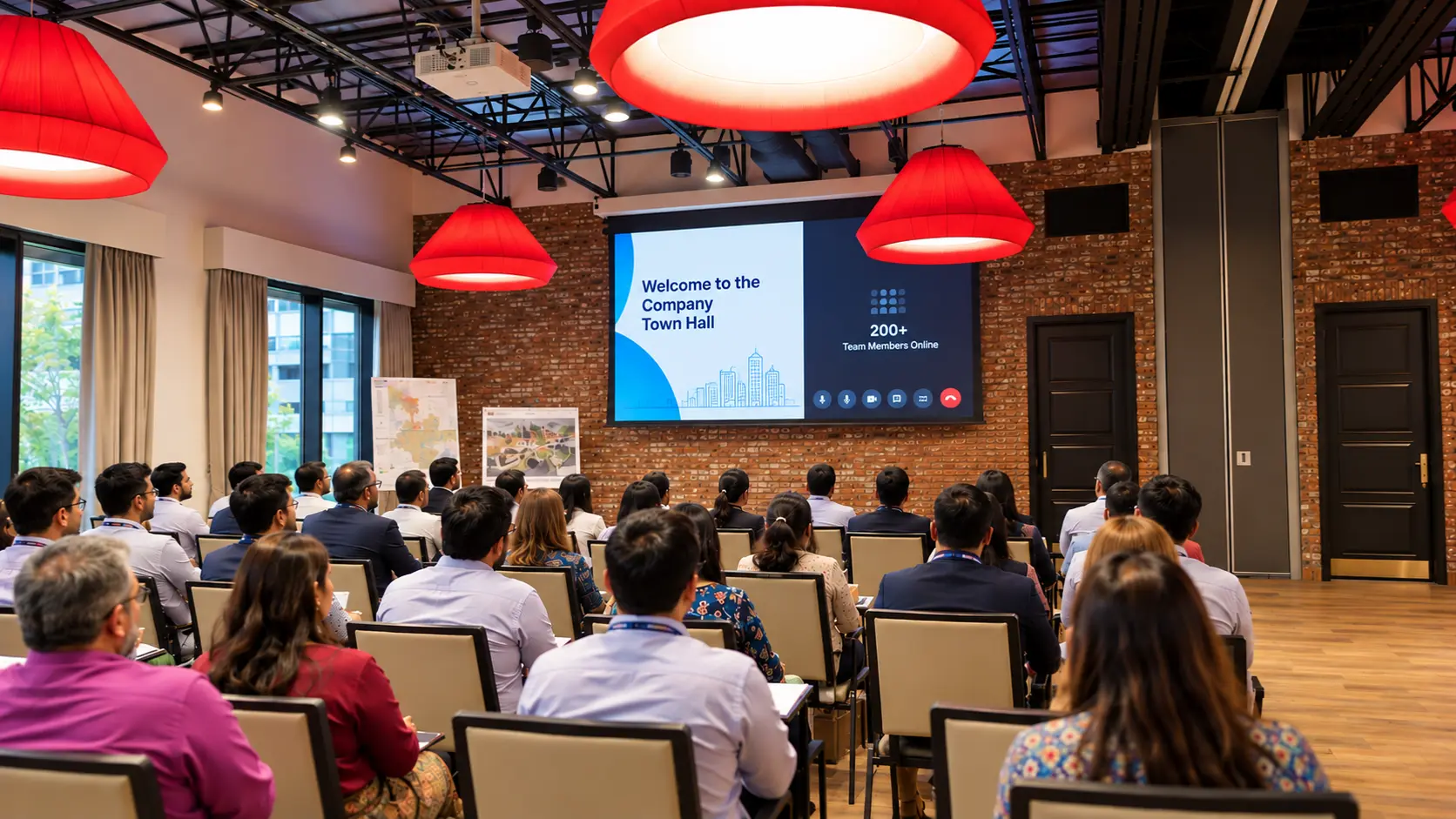
Modern meeting spaces are no longer just rooms, they’re intelligent collaboration hubs powered by AI, automation, and hybrid technologies that boost productivity.
The workplace has evolved a lot. Offices are well-designed and thoughtfully equipped with the latest technologies. But when employees join a hybrid meeting, the interactions typically begin with such questions as: “Can you hear me?” or “Can you see my screen?” These mini technical hiccups immediately drain their energy, distract and lower the meeting productivity.
As a result, the key points that participants wanted to share are easily forgotten and can affect the rest of their day’s productivity .
A new study indicates that hybrid meetings are still less effective than fully remote meetings, attendees are more likely to miss important information, feel left out of meetings and require follow-up or discussions to clarify points.
In spite of the rapid pace of AI and workplace technology innovation, numerous organisations still face the challenge of outdated meeting room technology. Many companies still have not adopted modern collaboration technologies that can help them support the hybrid work model more effectively and seamlessly.
Things Employees Expect in Modern Meeting Spaces
The Need for a Smart AI Assistant
Imagine, what if AI could be an active participant in the meeting room, suggest action items, find out what questions have yet to be answered and keep conversations on track? It might sound like a futuristic vision of meetings, but these are becoming a reality in today’s meeting rooms.
AI doesn’t just record meetings, transcribe them and summarize them anymore. It can listen to meeting discussions, understand the context and give relevant feedback during discussions to keep the conversation on track. It acts as a smart meeting assistant.
For instance, Microsoft Copilot in Teams meetings and calls can assist in documenting activity items, pinpointing various perspectives on a subject, or noting any unanswered questions. It can also present data in simple-to-share formats like tables and summaries.
It can provide answers to queries such as:
- What are some questions that were not answered in this meeting?
- What were the team’s members’ views on this campaign?
- What are the pros and cons discussed?
Teams can focus on making decisions and moving projects forward instead of reviewing notes after the meeting, while AI captures and organizes key information.
No “People in the Room vs People Online” Experience
A recent survey revealed that 56% of the employees who have experimented with a hybrid meeting, found that in-person attendees are more engaged during a hybrid meeting than remote attenders.
The most common hybrid meeting challenges pointed out by employees are:
- Virtual participants feel less included as compared to those attending the meeting in-person.
- Input from in-office participants is more valued compared to virtual participants.
- Virtual participants have fewer opportunities in the hybrid meeting meetings than in-office participants.
Establishing a sense of equity is more important in hybrid meetings and is largely dependent on providing equal opportunity to participate. For this, the participants must be clearly seen and heard. And, everyone in the meeting should feel like they are an active part of the discussion.
Rooms That Configure Themselves
What if meeting rooms could understand context, not just occupancy? What if the meeting room prepared itself before participants arrived not just powering on displays and launching meetings, but doing much more?
The room pulls the agenda, loads relevant documents, opens dashboards, and displays meeting objectives.
While today’s smart meeting rooms can automatically power on displays, launch scheduled meetings, and adjust basic settings, the next generation of collaboration spaces will be far more intelligent and proactive.
Meeting rooms will be able to recognize the purpose of a meeting and adapt accordingly.
As workplaces continue to embrace intelligent technologies, employees will expect meeting spaces to function as active collaborators rather than passive environments. The future meeting room will not simply respond to commands, it will proactively assist teams, reduce friction, and create more productive and seamless collaboration experiences.
Immersive Collaboration
Employees need to collaborate immersively, not just connect.
Consider a team in Bangalore joining a meeting with colleagues in Mumbai. Brainstorming often happens on separate whiteboards or in different tools. This creates friction and limits engagement. In the future, employees will expect shared digital workspaces where everyone can contribute ideas, annotate content, organize concepts, and collaborate in real time.
Studies show the growing importance of technologies that support co-creation and teamwork across distributed workforces. As the future of collaboration evolves, organizations should invest in advanced collaboration technologies that transform meeting rooms into spaces designed for active participation and innovation.
Collaboration Is No Longer Just About Connection
Meeting room technology is rapidly evolving in the business world. Collaboration isn’t just about connecting people, it’s about improving team development, innovation and decision making.
Sometimes it’s not the people or the processes when the growth of business slows. Efficient meeting experiences, collaboration environments and technology can also be potential challenges to productivity and progress. In today’s environment, the spaces employees use for meetings need to be equally collaborative, smartly automated and engaging to achieve value and results.
Resurgent AV Integrators, recognised as one of the best AV integrators in India, are aware of these changing expectations of workplaces. That is why we provide corporate AV solutions for the future that enable meeting rooms to become smarter collaboration spaces. Whether it’s delivering AI-driven meeting experiences, providing hybrid collaboration capabilities, or creating immersive workplace technologies, we power organizations to create environments that enable teams, boost productivity, and facilitate business growth.
Contact us today to transform your meeting rooms into smarter, future-ready collaboration spaces based on your requirements. From design to implementation, we help at every stage to create workspace that improve communication, collaboration and productivity.
Sources: https://www.techradar.com/pro/are-your-hybrid-meetings-doing-more-harm-than-good-new-survey-finds-many-of-us-forget-about-remote-colleagues
https://www.microsoft.com/en-us/worklab/work-trend-index
https://support.microsoft.com/en-US/teams/meetings-events/welcome-to-copilot-in-microsoft-teams
https://info.logitech.com/rs/201-WGH-889/images/20220908-Logitech-Equitable-Meetings-eBook.pdf
FAQ
- Why are modern meeting spaces important for today’s workplace?
They reduce meeting friction, improve collaboration, and help teams make better decisions faster.
- How does AI improve meeting experiences?
AI captures key discussions, summarizes conversations, and highlights action items so teams can stay focused.
- What makes a hybrid meeting truly inclusive?
Every participant should be able to see, hear, and contribute equally, regardless of their location.
- How do smarter meeting spaces impact business performance?
They boost productivity, enhance employee engagement, and enable faster, more effective collaboration across teams.
- Why choose Resurgent AV Integrators for modern meeting room solutions?
Resurgent AV Integrators delivers customized AV solutions that improve collaboration, simplify meeting experiences, and support the evolving needs of hybrid workplaces.
Written By
Surendar Kannan
(Alchemist – Design & Estimation)