Reskilling at Scale: Why Training Infrastructure Is Now a Strategic Asset
Learn why scalable training infrastructure drives workforce reskilling, improves retention, and supports hybrid learning in modern enterprises.
Your teams are learning all the time. New tools arrive every quarter. Compliance rules change without notice. AI reshapes job roles faster than most learning plans adapt.
Now ask yourself a simple question – is your training environment keeping up?
You may ask:
Why do training programs fail to stick?
Why do employees disengage halfway through sessions?
Why do remote participants feel excluded from in-room discussions?
Many organisations invest in content and trainers. Few invest in the environment where learning happens. Low engagement, poor retention, and slow skill adoption reveal the gap.
Reskilling is now an ongoing project, not a one-time effort.
It’s a constant function.
And whether your staff stays current or falls behind depends on the infrastructure supporting it.
Why Continuous Reskilling is Now Non-Negotiable
Automation and AI are revolutionizing jobs in several sectors. Tasks formerly performed manually are today assisted or replaced. New knowledge will help you achieve success.
At the same time, compliance requirements are growing. Finance, healthcare, manufacturing, and other sectors require frequent upgrades. To avoid punishment, teams have to keep aligned.
This creates three clear pressures:
Skills expire faster than before
Training cycles shorten
Learning must reach more employees across locations
Traditional training models struggle under this pressure. They were built for occasional sessions, not continuous learning at scale.
Why Projector-Based Training Rooms Fall Short
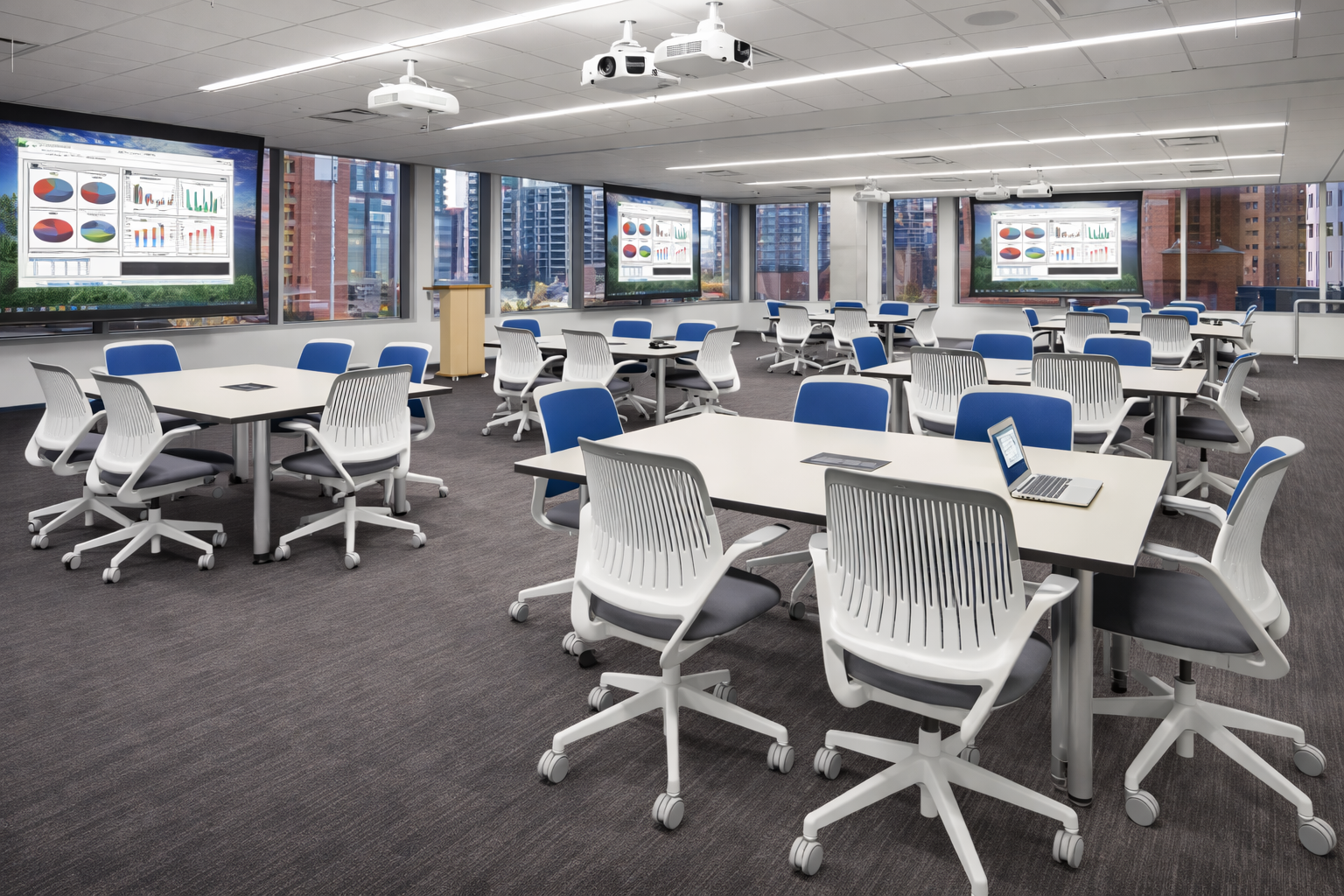
Walk into a typical training room. Rows of chairs. A projector. A presenter speaking for hours.
This setup worked when training was passive and infrequent. It does not work today.
Here is why:
Limited engagement: Participants sit and listen. Interaction stays low. Attention drops within minutes.
Poor visibility & clarity: Projectors often suffer from low brightness and unclear visuals. Complex data or dashboards become hard to read.
No support for hybrid learning: Remote participants feel disconnected. They miss context, side discussions, and visual cues.
Minimal collaboration: Group activities become difficult. Sharing ideas or working together in real time is not seamless.
Static setup: Rooms are not flexible. Rearranging for different formats takes effort and time.
The result is predictable. Learners forget most of what they heard. Trainers repeat sessions. Productivity drops.
What Modern Training Demands Instead
Training today needs to mirror how people work. Teams collaborate across locations. They use digital tools. They expect speed and clarity.
A modern training environment supports:
Real-time interaction across physical and remote participants
Clear audio and visual delivery for complex content
Easy content sharing from multiple devices
Flexible room layouts for different learning formats
In-room and remote participants annotate and ask questions live
Breakout groups collaborate using shared digital boards
Sessions are recorded with clear audio and visuals for later access
Outcome:
Faster understanding of the tool
Higher participation across locations
Reduced need for repeat sessions
Quicker adoption across teams
This is what scalable reskilling looks like in practice.
How Training Environment Quality Affects Knowledge Retention
The setting in which learning occurs determines how much knowledge people retain.
Active learning regularly helps memory, studies have repeatedly demonstrated.
Did you know that after eight months, students who regularly engaged in their classes could recall about 70.6% of what they learned? Let’s turn to the other group now. Students who learned by conventional means only retained marginally over 54.25% of their lectures over the same time span. (Source)
Learners’ memory improves when they see, hear, and interact.
A high-quality training setup supports this through:
It also reduces long-term costs. Fewer repeat sessions. Less travel. Better use of trainer time.
Organisations that treat training infrastructure as a strategic asset move faster. They adapt quicker. They stay competitive.
Conclusion and Next Steps
Reskilling at scale depends on more than content. The environment where learning happens shapes engagement, retention, and speed of adoption.
If your training spaces rely on basic projectors and limited collaboration tools, every session delivers less value than it should.
Resurgent AV helps in bridging this gap. Our AV solutions help establish a connected, hybrid-ready environment where more learning and interaction occur.
Our system integrations unify communication platforms such as Microsoft Teams, Cisco WebEx, VIDYO, Zoom, and Polycom, packaging it all together. One-touch collaboration is made easy in rooms of any size.
Our solutions include:
Interactive displays and projectors for hands-on learning
Clear, consistent audio through ceiling speakers and microphones
Wireless presentation and BYOD connectivity
HDMI and VGA inputs with clean cable management
Room scheduling panels and simple touch controls
For advanced spaces like boardrooms and training hubs, we deliver:
High-resolution LED displays
Integrated lighting and sound systems
Wireless and wired presentation options
For training environments, we focus on engagement:
Interactive AV systems
Wireless and lapel microphones, including Catchbox
Why Digital War Rooms Are Becoming Essential for Modern Enterprises?
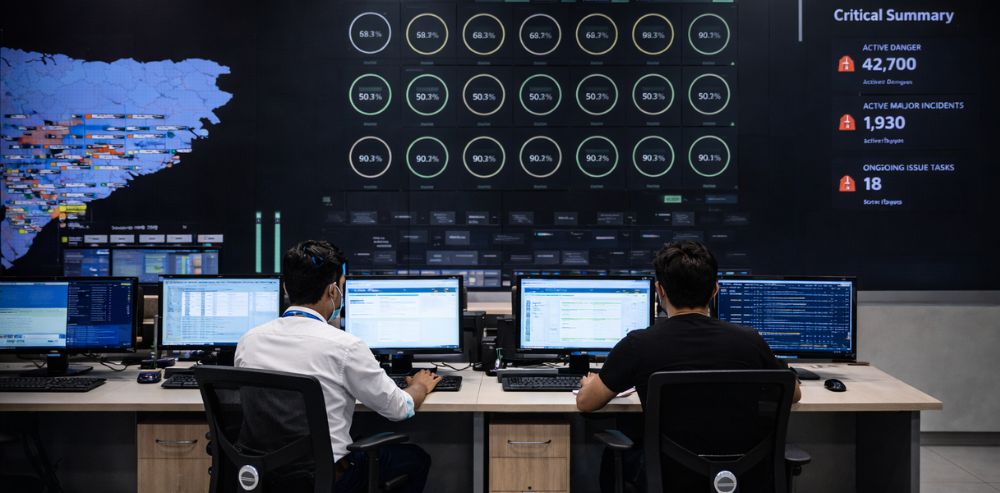
Digital war rooms help enterprises monitor supply chains, cyber threats, networks, and factories in real time. Learn how visual clarity speeds operational decisions. A shipment stalls in transit. A production line slows. A security alert appears in the network logs. Each event triggers a question: Most organizations struggle with these moments. Information spreads across dashboards, […]
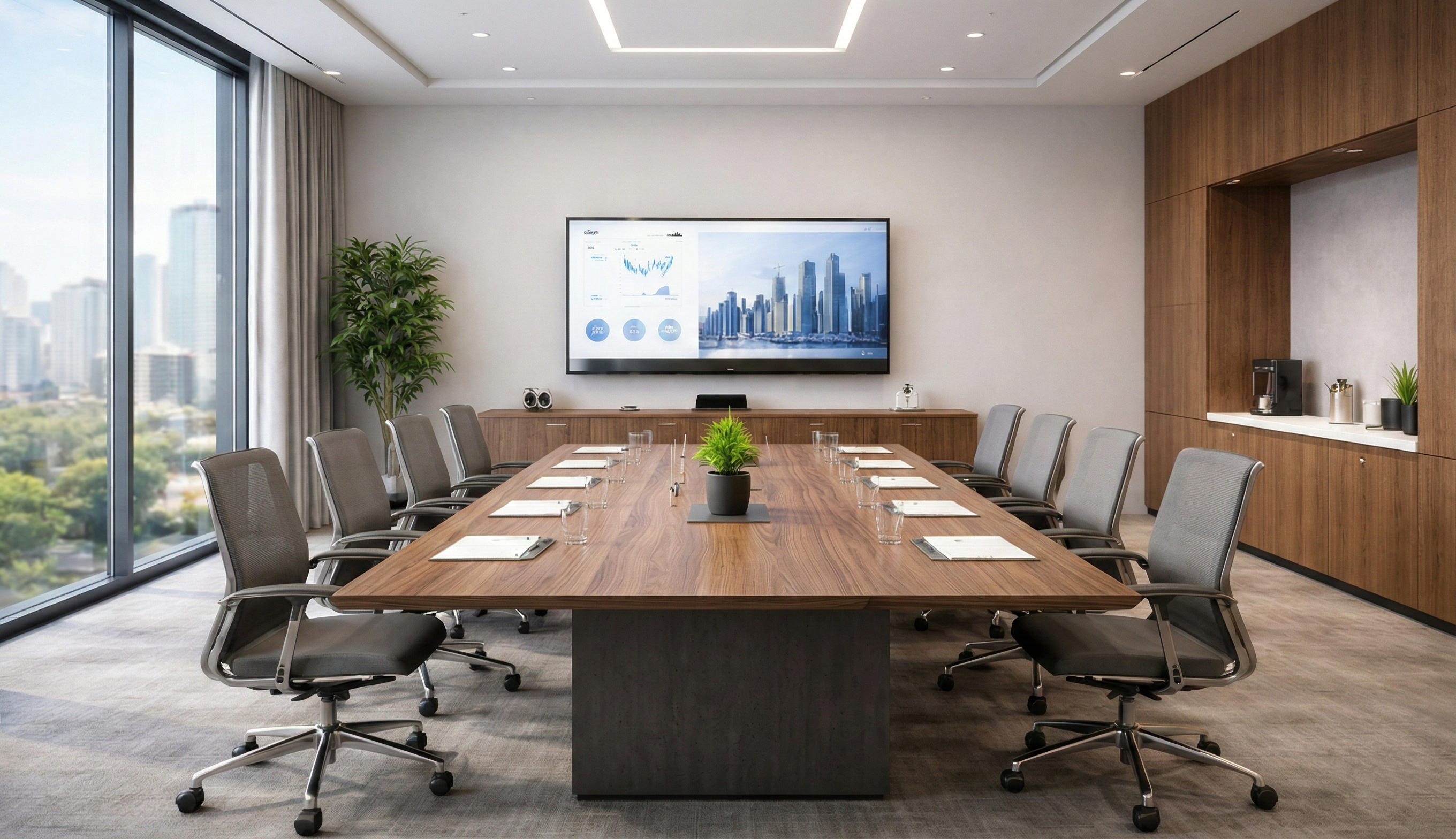
Rethink the standard meeting room. Learn how finance reviews, board updates, and cross-region meetings need different AV design and spatial intent. Does every meeting room in your office look the same? Same table. Same chairs. Same screen. Same camera. Now ask yourself. Do all your meetings behave the same way? Yet most enterprises replicate one […]
Why Some Meetings Drain People Before the Workday Even Starts
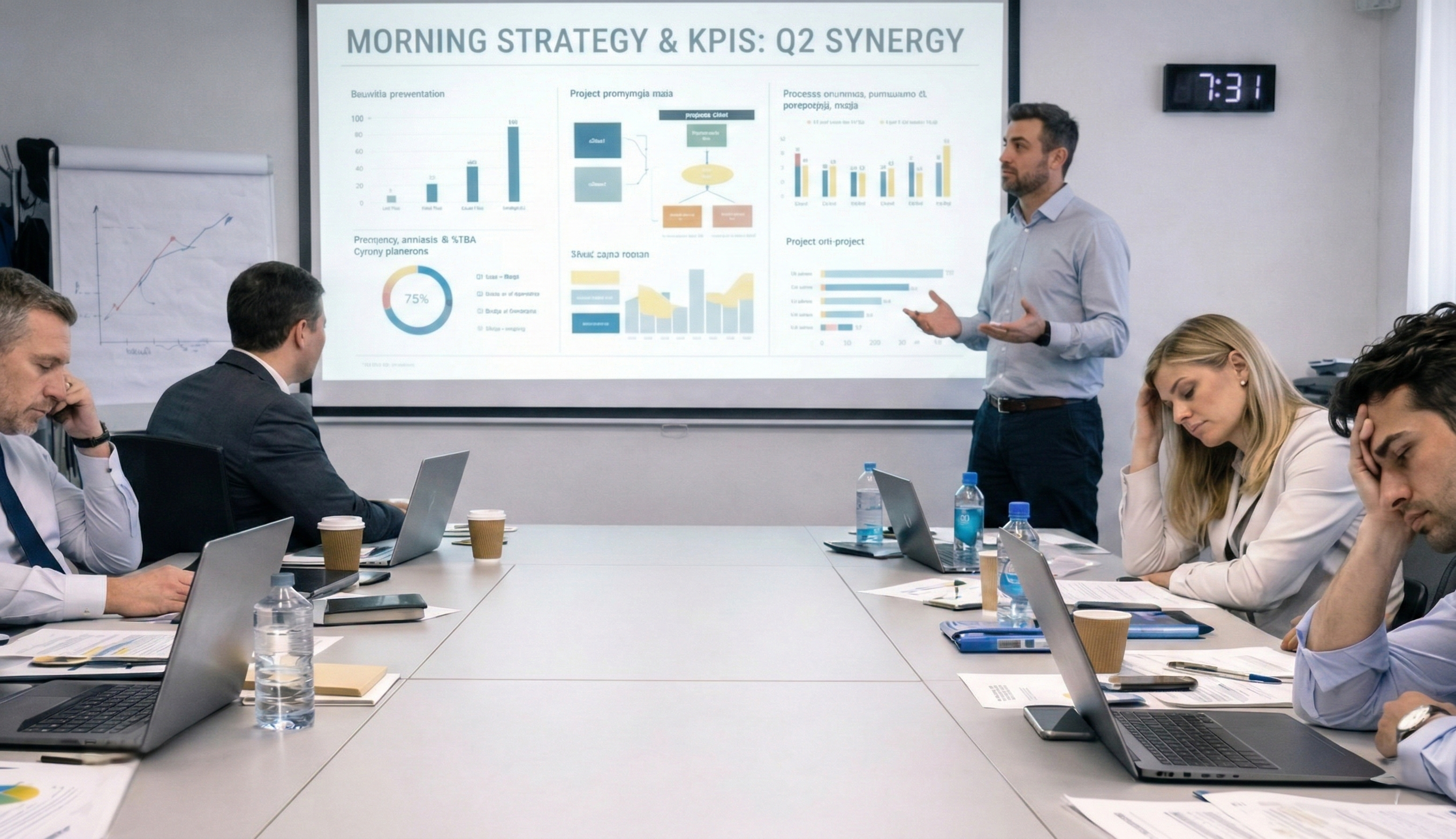
Early meetings drain energy when audio, visuals, and room comfort fail. Learn how better AV design protects focus and improves team output. Do you join a 9 a.m. meeting and feel tired before your first task? Do you struggle to follow voices or read shared screens? Many teams begin the day with friction. Early meetings […]