Home >>
Blogs
>>
What New Hires See That Leaders Often Overlook
What New Employees Notice That Leadership Teams Often Miss
New hires enter your office with a blank slate. No assumptions. No history. No unwritten rules. They observe your workplace with complete clarity.
The first week is a golden window. During this time, the new employee notices every point of friction. The slow software. The broken hybrid meeting tools. The communication failures.
Tenured employees do not see these issues. They learned to tolerate the friction long ago. They created workarounds. They developed habits to bypass systemic flaws.
The cost? High. These workarounds drain productivity. They frustrate new talent. Worst of all, your leadership team remains blind to the problems.
Why does this happen?
Leadership teams often focus on big-picture strategy. You look at quarterly goals. You analyze revenue. You review market share. You miss the daily operational friction.
Your new hires? They experience this friction on day one.
The Silent Drain of Workarounds
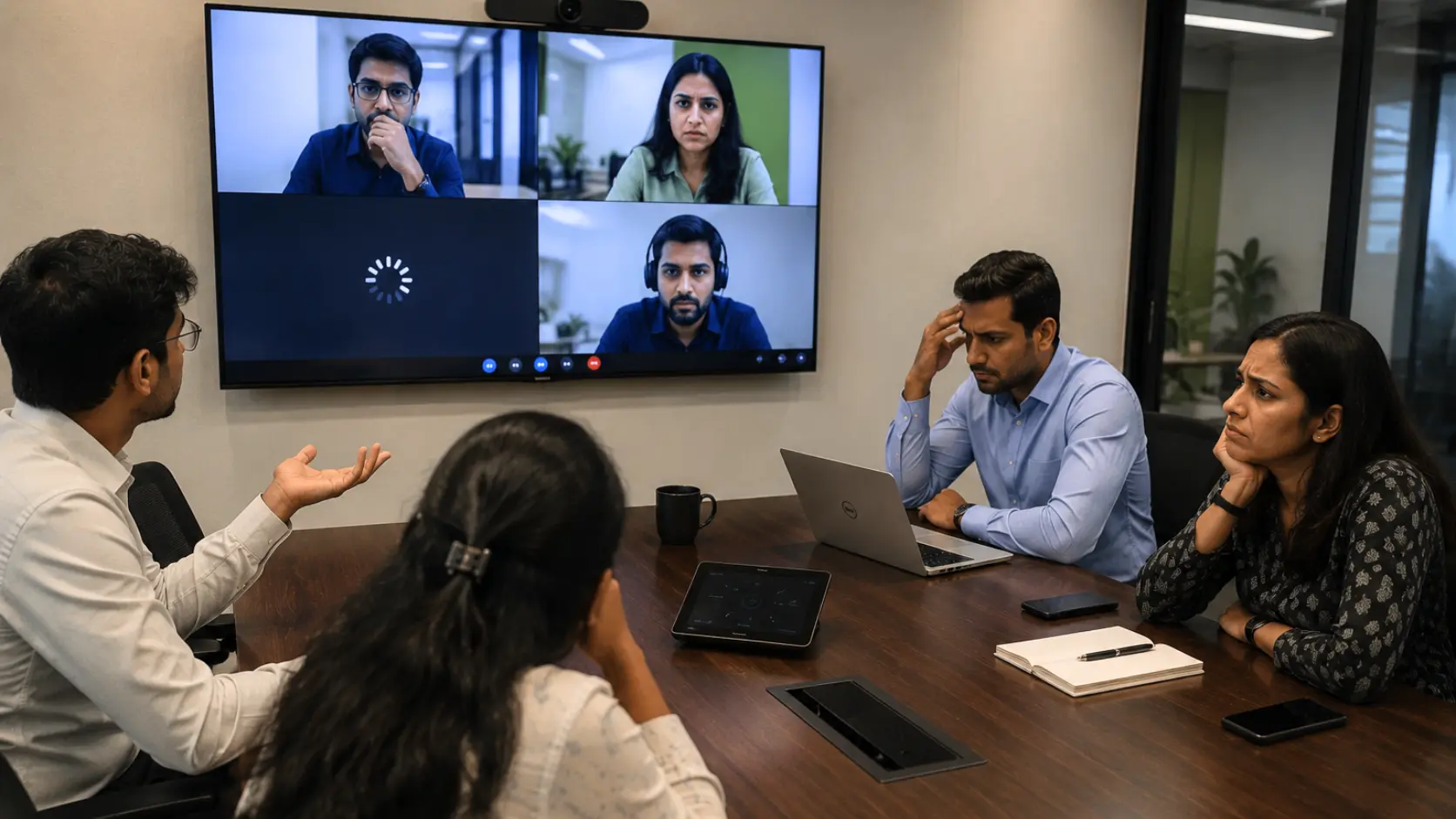
Consider a common scenario. A new marketing manager starts. This person needs to host a hybrid team meeting. This manager walks into your boardroom.
The meeting room setup is complex. Five remote team members wait on screen. The room audio is muffled. The video connection drops.
The new manager struggles with the wires. Tenured team members in the room offer advice.
“Oh, you have to unplug the black cable,” one says.
“Then you plug in the blue cable twice,” says a second person.
“We also turn off the left speaker because of the echo,” a third person chimes in.
The tenured staff smile. They find this ritual normal. To them, the workaround is a standard part of their day.
To your new hire, this ritual is baffling. A total waste of time.
The manager sees ten minutes of a meeting vanish. Remote workers feel ignored. The office team feels frustrated.
Your tenured staff became blind to the broken system. They normalized the friction. This normalization happens across your entire business.
The hidden cost? Let’s examine.
If ten employees spend ten minutes fixing a broken video link daily, you lose money. You lose focus. You lose momentum.
Your leadership team does not see this loss. You see a completed meeting on the calendar. The initial ten minutes of struggle beforehand are invisible to you.
Three Things New Hires Spot Instantly
New employees bring an objective perspective. They analyze workflows without bias. Here are three main areas new hires observe with complete clarity.
Broken Communication Channels
Do your teams use email, chat apps, and project boards simultaneously?
New hires immediately notice communication chaos. They have no idea where to find the latest information/updates.
Your team might say, “We chat here, but we assign tasks there, and we send final approvals via email.”
This messy system confuses new people. This disorganization slows onboarding.
The result? New hires ask simple questions:
“Where is the final project document?”
“Who approves this request?”
If your team answers with exceptions, your communication is broken.
Technology Friction in Shared Spaces
Hybrid work is standard now. Your physical spaces must connect with your digital spaces.
New hires expect seamless collaboration. They expect to push a button and start a video call.
Instead, they encounter legacy boardrooms. They face poor audio. They see blurry cameras.
These hardware issues send a message. They tell the new hire your organization does not prioritize modern collaboration.
The gap? Obvious. You claim to be innovative. Your meeting room technology tells a different story.
Cultural Disconnects and Inconsistencies
Every company has a mission statement. Every company has core values. New hires compare your stated values with daily actions.
Perhaps your company values say, “We prioritize balance.” Yet, the new hire receives emails from directors at midnight.
Perhaps your values say, “We trust our people.” Yet, your office setup requires manager approval for basic office supplies.
These contradictions damage trust. The new hire sees the gap instantly. They realize the written culture does not match the lived culture.
The Perception Gap: Tenured Staff vs. New Hires
Workplace Element
Tenured Staff View
New Hire View
Meeting Setup
A minor annoyance solved by a specific adapter.
A total waste of time delaying decisions.
Information Sharing
Asking colleagues for files.
Chaotic lack of central documentation.
Hybrid Collaboration
A struggle we must endure because of distance.
A failure of basic corporate audio-visual tools.
Onboarding Tasks
A standard learning curve.
A frustrating barrier to early productivity.
Office Culture
Normal way we interact with managers.
Inconsistent hierarchy with slow approvals.
Why Leadership Teams Fail to See the Friction
Leadership teams exist in a bubble. This bubble is a natural result of your position.
You do not experience the daily grind of entry-level systems. You do not log into the customer service portal. You do not set up the training room equipment.
Additionally, employees want to please you. They prepare meetings before you arrive. An assistant enters the boardroom early to test the sound and screens.
You walk in. The meeting starts instantly.
You believe your AV systems work perfectly. You do not see the fifteen minutes of preparation. You do not see the assistant struggling with legacy hardware.
This preparation hides friction. Your staff protects you from the pain of broken systems.
Leadership teams measure success through lagging metrics like sales figures and retention rates. These do not show daily frustration.
New hires do not have a reason to protect you yet. They want to do their jobs well. When they face obstacles, they talk about them.
Listen before they stop talking.
How to Capture Fresh Perspectives
Build a deliberate strategy to gather new hire insights. These insights vanish quickly. Typically, a new employee assimilates within thirty days. After thirty days, they accept your broken processes.
The solution? An actionable plan to extract this valuable feedback.
Create a Day-Fifteen Feedback Loop
Do not wait for ninety-day reviews. By day ninety, the employee has adapted to the friction. Schedule a feedback meeting on day fifteen. Ask specific, open-ended questions.
Do not ask, “How is onboarding going?” The employee will give a polite, empty answer.
Instead, ask direct questions:
“What is the most frustrating tool you used this week?”
“Which process feels unnecessarily slow?”
“Describe your experience setting up our meeting room technology.”
“Where did you find a conflict between our stated culture and real-world behavior?”
These questions give the employee permission to be honest. They show you value their critical eye.
Perform a Technology Audit with New Hires
Ask a new hire to host a hybrid call on their own. Do not assist them. Do not prepare the room beforehand.
Observe their experience.
Are they able to share their screen on the first try? Does the audio work instantly? Does the remote team hear them clearly?
This real-world test highlights flaws in your corporate AV setups. You will see the exact points of failure.
Bridging the AV Gap in the Hybrid Era
Modern organizations must bridge the physical and digital divide. Hybrid work is permanent. If your boardrooms and meeting spaces rely on complex, outdated setups, you actively damage employee engagement.
A new hire sees your office space as a tool to help them perform. When your technology fails, their enthusiasm drops. They realize your systems hinder progress.
Updating your physical workplace technology removes this friction. When employees walk into a room, they must feel confident. The microphones must catch every voice. The cameras must show every expression. The connection must happen in one click.
This level of integration supports your goals. This integration shows your team you value their time.
Partner with Resurgent for Seamless Corporate AV Solutions
Your new hires point out the friction. Your job is to resolve this friction.
Resurgent provides integrated AV solutions for corporates. These corporate AV solutions help organizations stay ahead and agile. They support your teams as your organization expands globally. They ensure your team thrives, even as work cultures become increasingly hybrid.
Audio-video integration does not apply solely to communication capabilities within a single space. Our AV solutions transcend spaces. They connect people across multiple locations and devices. This connectivity empowers teams to achieve their company goals.
Resurgent designs customized systems for every corporate space. Our solutions cover:
Unified Communication Systems
Boardrooms
Video Conferencing
Meeting Rooms
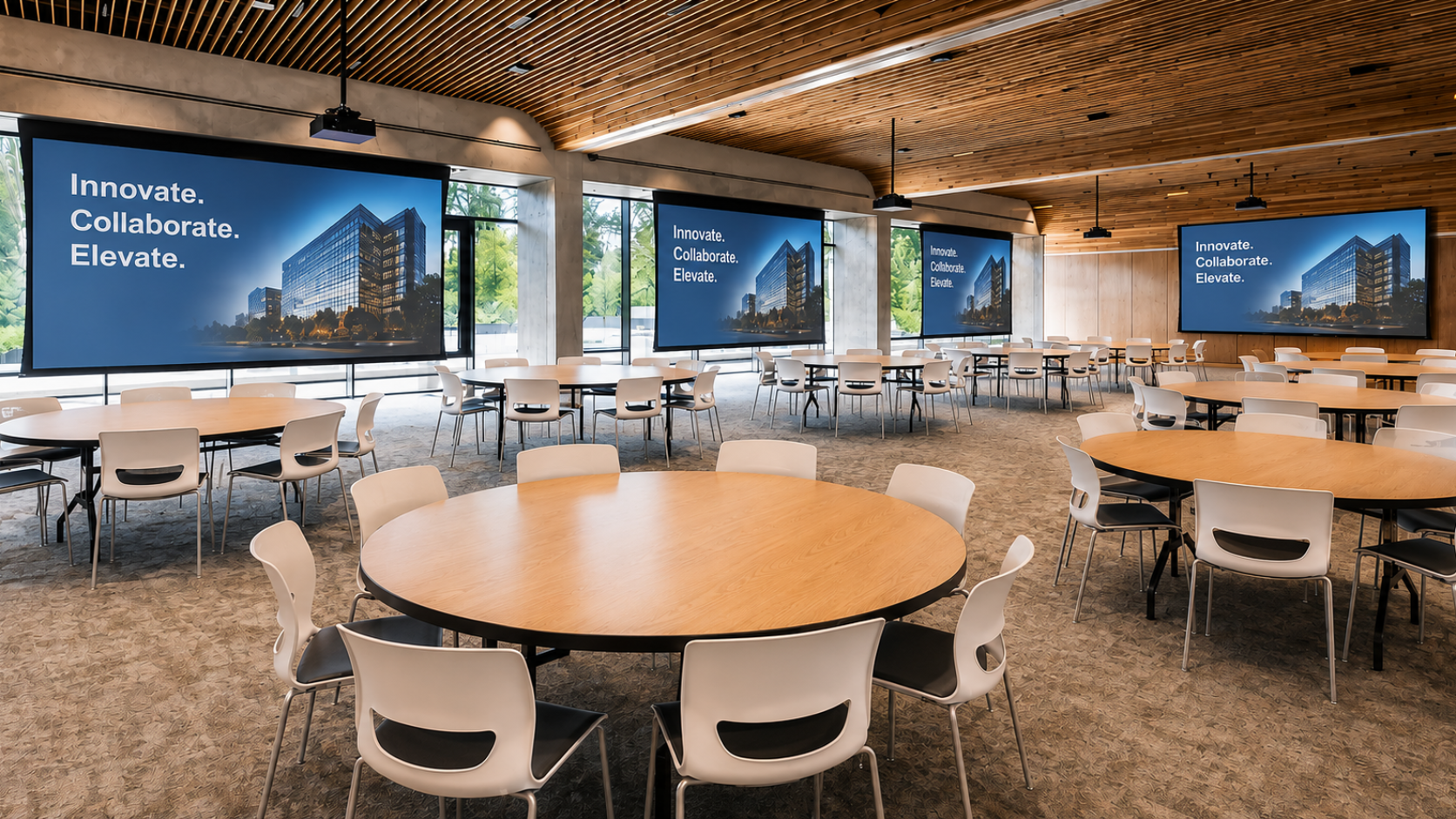
Cafeteria-Town halls
Training rooms
Collaboration spaces
NON-SOC rooms
Digital signage
Light control solutions
Sound masking solutions
Contact Resurgent to upgrade your corporate environment. Let us help you eliminate meeting room friction. Let us give your teams the tools to collaborate without barriers.
FAQs
1. Why do new hires spot office problems tenured staff ignore?
New hires enter your company without assumptions. Tenured employees already built habits to work around daily friction and no longer see the flaws.
2. When is the best time to gather feedback from a new employee?
Gather feedback around day fifteen. By day ninety, new hires adapt to your broken systems and stop noticing the issues.
3. How should I phrase questions to get honest feedback from new hires?
Avoid general questions. Ask specifically about frustrating tools, slow processes, and meeting room technology failures during their first weeks.
4. How does outdated boardroom technology affect a new hire’s onboarding?
Outdated technology wastes time and signals a lack of operational support. This friction reduces early productivity and dampens worker enthusiasm.
5. Who fixes corporate meeting room technology friction?
Most offices focus on boardrooms. Yet daily work happens in smaller spaces. These rooms are where quick discussions, hybrid check-ins, and brainstorming sessions occur. If your huddle rooms feel cramped, sound poor, or take too long to set up, you are not alone. Small meeting rooms often create big operational problems. The reasons are simple […]
Regular AV health checks prevent downtime, improve user experience, and reveal upgrade opportunities that deliver measurable ROI without new installs. Many AV providers still lead with installation pitches. New displays. New microphones. New control systems. But clients are not always asking for new technology. They are asking for reliability. They want every meeting, class, or […]