How meeting rooms shape authority, trust, and deal outcomes. Learn how AV design influences senior buyers during high-stakes business conversations.
You walk into a boardroom ready to close a deal. The numbers hold. The strategy feels tight. The people around the table look prepared. Yet something feels off. The screen flickers. Audio lags. Someone struggles to share a document. A senior buyer leans back, arms crossed, waiting.
The conversation slows. Confidence slips.
Why does this happen when preparation looks solid on paper?
Because deals do not happen only between people. They happen inside rooms. Rooms shape attention. Rooms signal authority. Rooms either support momentum or interrupt it.
In high-stakes discussions, the room becomes a silent participant. Senior buyers notice. They react. Often without saying a word.
This article looks at how space, technology, and audio-visual design influence deal outcomes. Especially when senior leaders sit across the table. Let’s start.
1. The Room Sets the First Signal
Senior buyers read signals fast. They have seen hundreds of presentations. They do not need explanations. The room tells them enough.
Within the first few minutes, they notice:
- Screen clarity and placement
- Audio quality across seats
- Ease of starting the meeting
- Layout of tables, chairs, and displays
- Lighting on faces and content
These signals shape early judgment.
A smooth start signals preparation and respect for time. A delayed start signals friction. Senior buyers equate friction with risk.
This reaction happens before the pitch begins.
2. Authority Lives in the Environment
Authority does not come only from the speaker. The environment supports or weakens authority.
Consider two scenarios:
- Scenario one: The presenter enters a meeting room. The display connects instantly. Content appears sharp. Remote participants appear life-size. Audio feels balanced across the table. The presenter speaks once. Everyone hears clearly.
The room supports authority!
- Scenario two: The presenter fumbles with cables. The screen shows low-resolution slides. Remote participants sound distant. Side conversations start.
Authority drains away!
Senior buyers associate clarity with control. Control signals readiness for scale. Scale signals safety.
Rooms that work smoothly reinforce authority without effort.
3. Spatial Cues Shape Power Dynamics
Power dynamics shift based on room design.
Senior buyers notice:
- Who controls the screen?
- Who struggles with tools?
- Who speaks without repeating?
- Who looks confident on camera?
Poor AV design forces presenters to manage tools instead of conversations. Senior buyers see distraction. They lose patience.
Good AV design fades into the background. The conversation stays in focus.
Rooms should remove friction. Not introduce new roles such as unofficial tech support.
4. Hybrid Meetings Raise the Stakes
Many high-value deals now include remote decision makers. Hybrid rooms raise complexity.
Senior buyers watching remotely judge even harder. They rely on audio and video to read confidence.
Common hybrid failures include:
- Remote voices sounding thin
- Cameras placed too high or too low
- Remote participants framed poorly
- Delayed screen sharing
Each issue weakens trust.
Senior buyers expect parity. They expect remote participants to feel present. Anything less signals lack of maturity.
A well-designed hybrid room treats every participant equally. No hierarchy between physical and remote seats.
5. The Psychology of Visual Control
Screens control attention. Senior buyers follow the screen more than the speaker.
Poor screen placement forces neck strain. Multiple screens without logic confuse focus. Low brightness reduces engagement.
Effective rooms follow clear rules:
- Screens sit at eye level
- Content stays readable from every seat
- One primary visual focus exists
- Supporting displays stay secondary
When visual control stays tight, discussions move faster. Decisions follow sooner.
6. Audio Shapes Trust More Than Video
Audio failures damage trust faster than video issues.
Senior buyers tolerate camera glitches. They do not tolerate repeating questions.
Clear audio supports:
- Faster decision cycles
- Reduced fatigue
- Fewer interruptions
- Higher engagement
Rooms need microphones placed for coverage, not aesthetics. Speakers need tuning for clarity, not volume.
When every voice sounds equal, authority spreads evenly. Conversations feel balanced.
7. Technology Signals Organisational Maturity
Senior buyers read technology choices as signs of organisational thinking.
Outdated tools suggest stalled progress. Inconsistent systems suggest internal friction. Seamless integration suggests operational discipline.
Meeting rooms reflect how organisations think about scale.
Integrated platforms matter:
- Microsoft Teams for consistent collaboration
- Crestron Flex for reliable room control
- Microsoft Surface Hub 2S for interactive sessions
- Samsung Flip for dynamic workshops
Consistency across rooms reduces learning curves. Senior buyers notice when teams move confidently across spaces.
8. Example #1: The Boardroom Pitch
A leadership team presents a regional expansion plan.
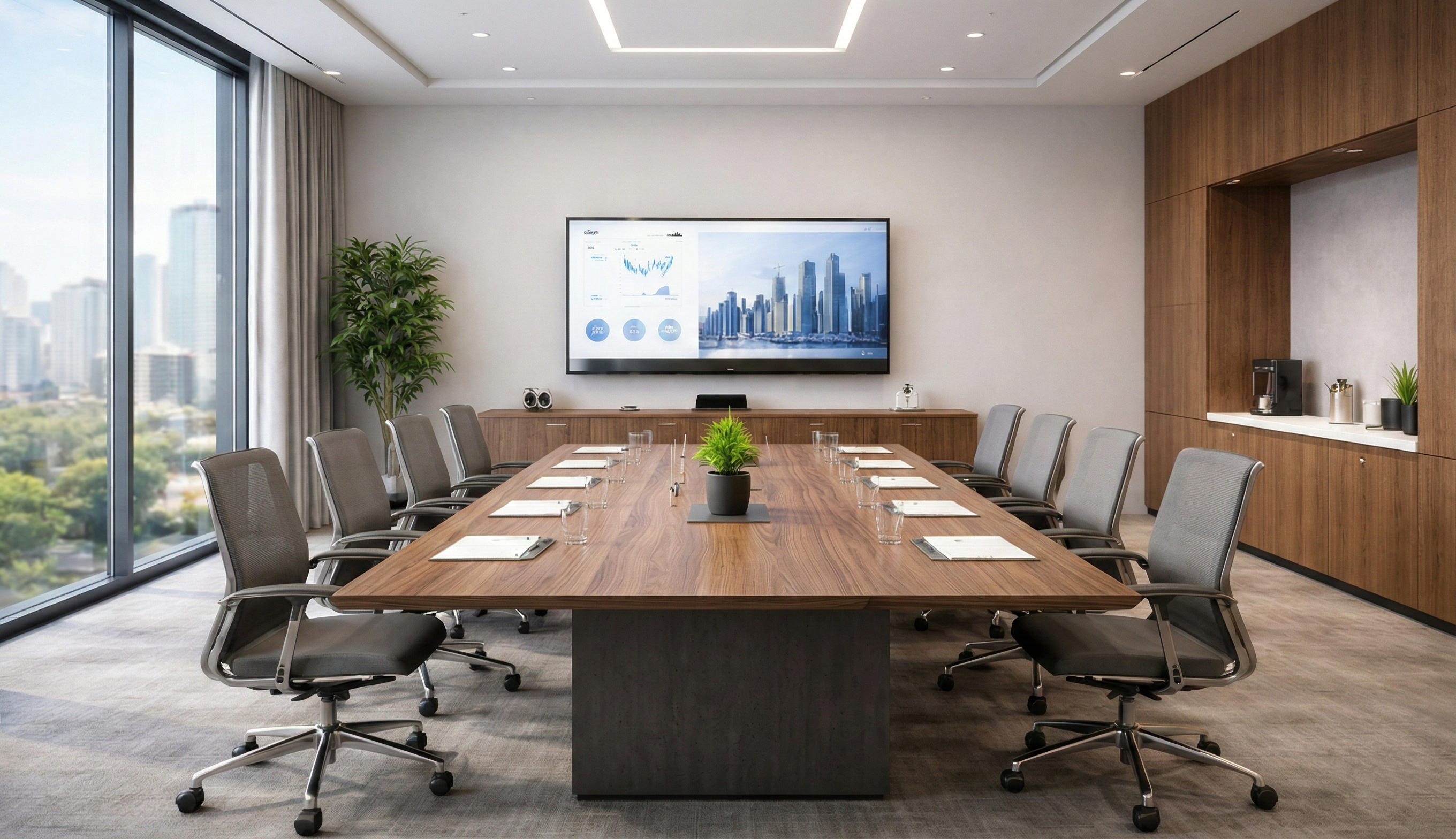
The room includes:
- Microsoft Surface Hub 2S for real-time edits
- Crestron Flex for one-touch meeting start
- Jabra PanaCast capturing the full table
- Microsoft Teams connecting global leaders
The meeting starts on time. Everyone sees the same data. Remote leaders participate naturally. Decisions happen live.
The room supports momentum. The deal moves forward.
9. Example #2: The Client Review
A services firm reviews performance with a key client.
Digital signage powered by PADS4 shows dashboards outside the room. Inside, Samsung Flip displays timelines. AirServer supports quick content sharing.
The client sees preparation before entering the room. Inside, the discussion stays focused. No one asks for files again.
Trust builds quietly.
10. The Cost of Ignoring the Room
When rooms fail, consequences follow:
- Meetings start late: Senior buyers notice delays immediately. Lost minutes signal poor coordination and weak internal alignment.
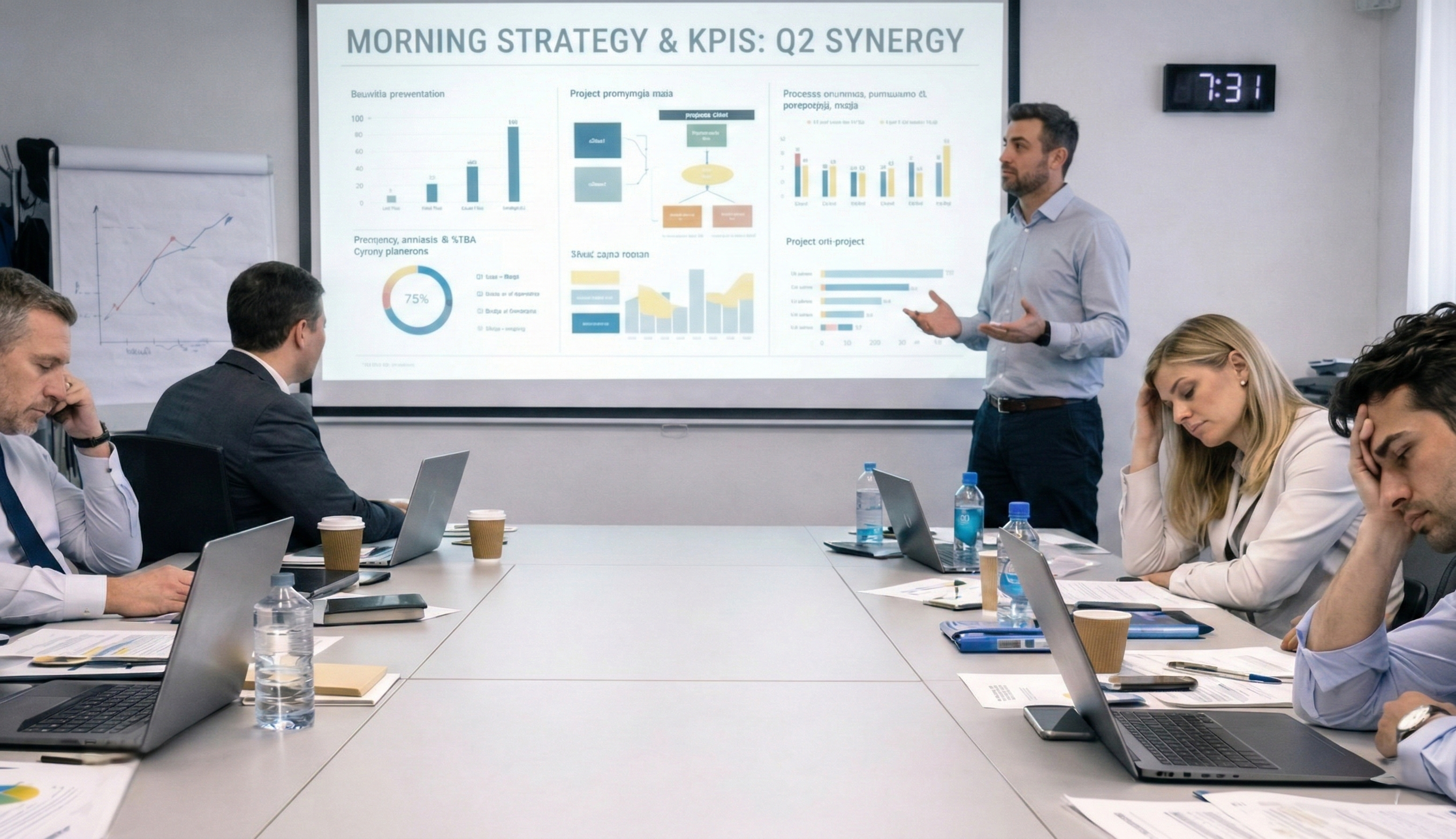
- Attention fragments: Participants focus on fixing screens, adjusting volume, or finding cables. The discussion loses flow.
- Authority weakens: Presenters who struggle with room controls appear less prepared, regardless of expertise.
- Senior buyers disengage: Phones come out. Side conversations begin. Key stakeholders stop contributing.
- Remote leaders fall silent: Poor audio or framing discourages participation. Their influence drops from the discussion.
- Decisions stretch across meetings: Lack of clarity forces follow-ups. Momentum breaks.
- Confidence declines mid-conversation: Presenters shift tone when technology interrupts. This change registers instantly.
- Misinterpretation increases: Poor visuals and audio lead to repeated explanations and missed nuances.
- Trust erodes subtly: Senior buyers associate friction with execution risk, even if the proposal looks strong.
- Deal velocity slows: What could close in one meeting stretches into weeks.
- Internal credibility suffers: Teams lose standing with leadership after visible meeting failures.
- Client perception shifts: Buyers question readiness for scale, delivery, or long-term partnership.
None of these failures feel dramatic. Together, they shape outcomes.
Rooms either protect momentum or chip away at it minute by minute.
11. How Resurgent Thinks About the Room
Resurgent designs rooms as active participants in business conversations.
The focus stays on productive collaborative experiences. Technology stays invisible. Conversations stay human.
Resurgent integrates solutions such as:
Each solution fits into a larger system. No isolated tools. No fragmented experience.
Resurgent brings over a decade of experience across corporate environments. Custom deployment plans align with business goals. Enterprise Project Delivery Teams ensure timelines stay clear. Quality control programs protect user experience.
Rooms stay reliable. Teams stay focused.
12. In A Nutshell
Deals depend on more than words. The room shapes perception, confidence, and trust. Senior buyers notice every signal. Smooth rooms support authority. Friction-filled rooms raise doubts.
Organisations investing in collaborative environments move faster. They signal readiness. They support decisions.
Resurgent creates interactive environments designed for modern business. Our corporate AV solutions connect people across spaces, locations, and devices. We help teams stay agile as work becomes more hybrid and global.
Resurgent transforms how organisations share information and make decisions. We simplify communication. We align technology with business goals. We support scale without disruption.
Contact Resurgent today to design meeting rooms that work as partners in every deal.
FAQs
- Why does the meeting room affect deals so much?
Because senior buyers read the room before they listen to the pitch. Smooth spaces signal control. Friction signals risk!
- What room issues weaken confidence during important meetings?
Poor audio, slow starts, messy screen sharing, and awkward layouts pull focus away from the conversation.
- Why do hybrid meetings feel harder to manage?
Remote leaders judge through sound and video alone. Any imbalance makes participation feel second-class.