A behind-the-scenes look at the 23 invisible engineering decisions that make modern meeting rooms work smoothly for hybrid teams.
You walk into a meeting room. The screen wakes up. Audio sounds clear. Remote colleagues join without friction. No one talks about the room. Everyone talks about work.
Now think about the opposite. Echoes. Delays. Cameras aimed at the ceiling. Cables taped to tables. Ten minutes lost before the agenda starts.
Most teams blame tools or users. The truth sits elsewhere. Meeting rooms succeed or fail long before the first calendar invite. Success depends on dozens of invisible decisions. Each choice shapes sound, light, power, signals, and behavior.
This walkthrough explains those decisions. The focus stays on practical logic. No mystery. No fluff. Only the work required to make a room fade into the background.
Acoustic Decisions People Never Notice
Sound quality decides meeting outcomes. Clear audio shortens meetings. Poor audio creates fatigue.
Invisible decisions include:
- Room volume calculations: Engineers calculate cubic volume. Larger volumes demand stronger acoustic treatment. Smaller rooms need tighter control.
- Surface analysis: Glass, concrete, and wood reflect sound. Soft panels absorb sound. Balance matters.
- Reverberation targets: Teams define acceptable reverberation time. Corporate meeting rooms target speech clarity, not music richness.
- Microphone placement logic: Ceiling arrays differ from table microphones. Placement depends on seating layout and ceiling height.
- Noise floor measurement: Air conditioning, outside traffic, and electrical hum affect clarity. Engineers measure background noise before final design.
A boardroom with marble walls sounds premium. Without treatment, voices blur. Strategic panels behind speakers fix clarity without changing aesthetics.
Camera Framing Decisions Shape Trust
Cameras influence perception. Poor framing reduces engagement. Strong framing builds presence.
Key decisions include:
- Camera height alignment: Eye-level framing supports natural conversation. High angles feel distant. Low angles feel awkward.
- Field of view selection: Wide lenses suit huddle rooms. Narrow lenses suit long tables.
- Auto framing behavior: Teams decide between static framing and speaker tracking. Each suits different meeting styles.
- Sightline mapping: Screens, cameras, and seating align along one visual axis. Mismatch causes constant head turns.
Hybrid leadership meetings fail when remote faces appear off-axis. Proper alignment restores eye contact flow.
Display Decisions Affect Attention
Screens carry information and social cues. Size and placement matter.
Invisible choices include:
- Screen size to distance ratio: Engineers calculate viewing distance. Text readability guides size selection.
- Display brightness control: Bright rooms need higher nits. Overpowered displays cause eye strain.
- Orientation logic: Landscape suits dashboards. Portrait suits digital signage and room booking.
- Touch versus non-touch use: Interactive boards suit workshops. Passive displays suit briefings.
Resurgent deployments often pair Microsoft Surface Hub 2S or Samsung Flip with a room purpose. Workshops differ from executive updates.
Power Planning No One Thanks
Power failures ruin meetings. Strong power planning prevents downtime.
Hidden decisions include:
- Load calculations: Displays, cameras, compute units, and chargers draw power. Engineers calculate peak loads.
- Redundancy planning: Critical rooms receive backup power paths.
- Outlet placement: Floor boxes, wall outlets, and table grommets follow seating plans.
- Heat dissipation: Devices generate heat. Ventilation protects performance.
A room with added devices fails after six months. Heat buildup throttles performance. Early ventilation planning avoids failure.
Cable Routes Protect Reliability
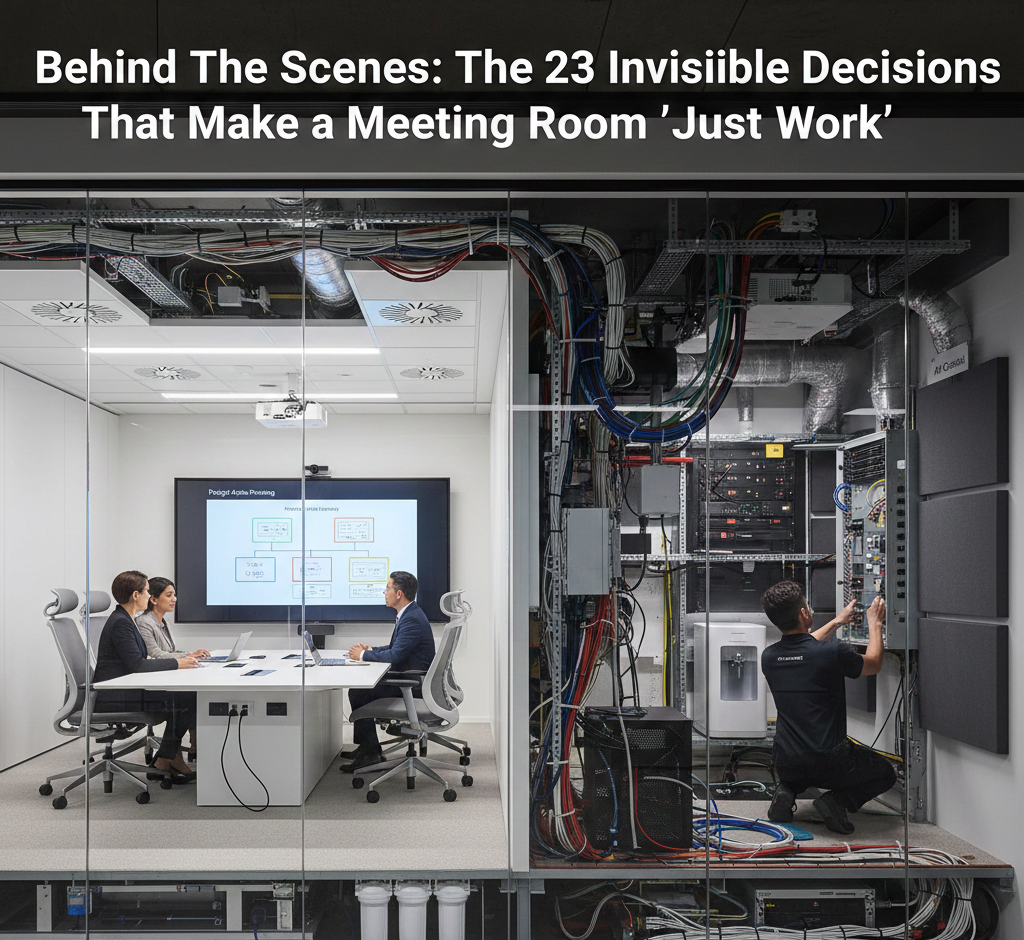
Cables rarely appear in photos. Cable routes decide longevity.
Decisions include:
- Signal path mapping: Shortest paths reduce signal loss. Clean paths simplify troubleshooting.
- Separation of power and data: Interference risks rise when lines cross. Engineers isolate paths.
- Service access planning: Technicians need access without dismantling walls.
- Future expansion allowance: Extra conduits support later upgrades.
A clean table hides weeks of routing work. Floors, walls, and ceilings carry hidden infrastructure.
Device Negotiations Behind Closed Doors
Devices talk to each other. Compatibility matters.
Invisible decisions include:
- Platform alignment: Rooms align around ecosystems such as Microsoft Teams. Crestron Flex integrates control and compute.
- Protocol management: Wireless sharing tools such as AirServer require network coordination. Video bars such as Jabra PanaCast demand bandwidth planning.
Engineers test handshake behavior. Devices negotiate resolution, audio priority, and control commands. One weak link disrupts experience.
Installation Day Micro Adjustments
Installation day decides success. Plans meet reality.
Final decisions include:
- Fine-tuning microphone sensitivity
- Adjusting camera presets
- Calibrating touch accuracy
- Testing cable strain relief
- Running real meeting simulations
Teams test with laptops, phones, and room systems. Engineers observe human behavior. Small tweaks prevent future support calls.
Why Simplicity Requires Discipline
Simple rooms hide complexity. Each decision removes friction. Each compromise introduces risk.
Strong meeting rooms share traits:
- Predictable startup
- Clear audio at all seats
- Natural camera framing
- Minimal user training
- Stable performance under load
Achieving those traits demands discipline. No shortcuts exist.
How Resurgent Approaches Invisible Decisions
Resurgent designs rooms as systems, not product bundles. Each room starts with behavior analysis. Teams ask how people speak, present, and decide.
Resurgent delivers:
- End-to-end AV planning
- Platform-aligned deployments
- Scalable infrastructure for global teams
- Quality control across installation stages
- Enterprise Project Delivery Team coordination
Solutions integrate tools such as Microsoft Teams, Crestron Flex, Jabra PanaCast, Microsoft Surface Hub 2S, Samsung Flip, PADS4 Digital Signage, Surge+, and AirServer. Each selection follows the room’s purpose and growth plans.
Resurgent builds environments where technology fades. Focus stays on decisions and outcomes.
Conclusion and Next Steps
Meeting rooms never fail by accident. Failure grows from ignored details. Success grows from invisible decisions.
Teams deserve rooms where meetings start on time. Voices sound clear. Screens share information without friction. Remote colleagues feel present.
Resurgent creates productive collaborative experiences through interactive environments built for hybrid work. Over a decade of experience guides each deployment. Custom plans, strong governance, and quality control protect performance across the project lifecycle.
Resurgent supports global growth and evolving work cultures. Audiovisual solutions extend beyond single rooms. Teams connect across locations and devices with confidence.
Contact Resurgent today to plan meeting spaces where technology works quietly, and teams move faster.
FAQs
- Why do some meeting rooms work smoothly while others waste time?
Because the hard work happens before installation, with smart choices around sound, layout, power, and devices.
- Why do cameras and screens feel awkward in hybrid meetings?
Wrong height, angle, or placement breaks eye contact and makes remote teams feel disconnected.
- Why does a simple meeting room need so much planning?
Clean rooms hide complex decisions around cabling, power, compatibility, and future upgrades.