According to Forbes, 12.7% of full-time employees worked from home in 2023, while 28.2% worked in the hybrid model. This suggests that the hybrid workplace is here to stay – and is not just a temporary arrangement.
This “mix-and-match” approach delivers a lot of benefits both for employees and corporates. Higher worker productivity, work-life balance, and lower operational costs are just a few of them. However, this transition is also bringing its unique set of challenges.
For many years, business leaders have worked with distributed teams across the globe. They are familiar with some of the challenges of hybrid or distributed work, which cannot be ignored. Here’s a look at 5 critical employee-related challenges with the hybrid work model:
- Lack of collaboration among employees
Among the recent findings, more HR leaders are concerned about employee collaboration now than before the pandemic. Without the right execution, hybrid working can disrupt team dynamics, thus making real-time collaboration a problem.
Furthermore, one in five employees cite a “lack of change management” when adopting a new tool for hybrid working. Lack of collaboration can directly impact employee engagement. 50% of employees are more engaged in a collaborative work environment.
Productivity tools like MS Teams can enable real-time collaboration in the hybrid workplace. Regardless of their location, employees can contribute and share their knowledge for specific projects.
- Inefficient communication
Even with a highly engaged workforce, communication barriers can often slow work progress. Hybrid workers frequently confuse or miss out on crucial information, which can impact their productivity.
A 2023 Harvard Business Review article highlights how poor communication can impact any business team. 7 in every 10 employees rate their managers as “mediocre” in managing remote or hybrid teams. 30% of them are frustrated by the unclear communication from their managers.
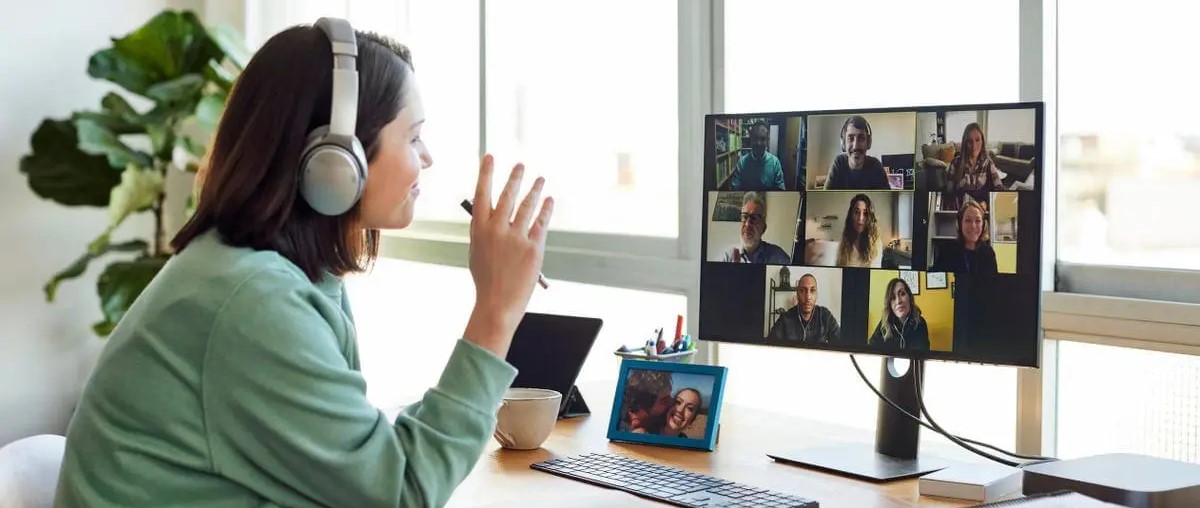
Hybrid working companies need technology-enabled communication channels to convey information to their hybrid workforce. For example, video conferences can replicate the “formal” in-person communication between managers and employees.
An Economic Times study found that 9 in every 10 professionals believe that hybrid working is essential for their work-life balance. Nearly 50% of professionals believe that this flexible work model helps them pursue their personal and professional goals.
However, the downside of hybrid working is that many employees are unable to “switch off” from work, thus impacting their mental well-being. By blurring the boundary between work and home, employees often face mental fatigue and burnout.
Organizations can meet this challenge by focusing on employee well-being. This involves initiatives like managers “virtually” checking in with their remote-working members – or having a “virtual” coffee break.
There’s no doubt that employees are more productive when working from home. The hybrid working model has improved productivity for 77% of fully (or partially) remote-working employees.
On the flip side, this 2023 Forbes article also highlights the productivity problem in remote working. According to Upgraded Points, remote workers also spend a lot of time in non-work activities like:
- Social media browsing (75%)
- Online shopping (70%)
- Watching movies (53%)
To do their daily work, remote workers are also accessing too many applications, thus causing app fatigue. Organizations can improve productivity among hybrid workers through employee engagement and a positive workplace culture.
- Impact on organizational culture
With limited face-to-face interactions, hybrid employees often feel disconnected from the organizational culture and goals. Furthermore, as existing employees leave and new employees join the company, it’s challenging for them to integrate them into the company’s culture.
Organizational culture is all about building connections among employees. Workers with workplace friends are more productive and enjoy their daily work. This is challenging for hybrid workers who do not get the time and space to make personal connections.
This is where technology-enabled employee engagement initiatives can help build a positive work culture among in-office and hybrid employees.
How ProAV solutions can craft a seamless hybrid workplace
Professional Audiovisual (ProAV) solutions can enable enterprises to craft a seamless hybrid workplace and address each of these employee-related challenges. Collaborative AV tools like MS Teams Rooms and Zoom Rooms can keep remote workers updated on the latest developments in their companies.
ProAV solutions can provide hybrid workers seamless access to relevant tools and information to do their daily work. This helps in improving worker productivity. Through “virtual” meetings, AV solutions are elevating the meeting experience with a human-centric approach. Office and remote teams are collaborating to “brainstorm” new ideas and suggestions.
Here’s how companies can address employee challenges in a hybrid working environment:
- Setting and communicating clear expectations from their employees.
- Providing them with the right AV platform and support.
- Creating an inclusive employee experience to build a positive work culture.
In summary
A hybrid workplace has its share of benefits and challenges for modern enterprises. By partnering with the right AV solution integrator, you can leverage this technology to overcome these common challenges.
As an AV integrator, Resurgent has facilitated the hybrid experience for its global customers. Along with our AV expertise, our human-centric approach can help you design a digital workplace customized to your needs. Are you looking for assistance? We can help you. Book a consultation with our team today.